If you’ve ever knuckled under a car in your driveway and realized you’re tethered to an extension cord running across your garage, you know the frustration. Cordless tools have transformed home auto repair from a cable-management nightmare into something genuinely manageable. Milwaukee cordless tools, in particular, have earned a solid reputation among DIY mechanics and pros alike for their reliability and runtime. Whether you’re swapping brake pads, replacing spark plugs, or tackling exhaust work, the right cordless setup turns a cramped garage into a functional workshop. This guide covers the essential cordless tools every home mechanic should consider, what to look for when buying, and how to set up a practical system that actually gets used.
Table of Contents
ToggleKey Takeaways
- Milwaukee cordless tools eliminate extension cord hassle and deliver 30–60+ minutes of runtime per charge, making weekend auto repair projects manageable without garage clutter.
- A cordless impact wrench and drill-driver form the foundation of a home mechanic’s toolkit, handling 90% of fastening, drilling, and brake work without the weight and setup time of corded equipment.
- Milwaukee’s interchangeable M18 battery ecosystem means one charger powers multiple tools, and rotating between batteries maximizes productivity while others charge—a practical advantage over single-purpose corded tools.
- Look for brushless motors, 18V or 20V systems, and adequate amp-hour ratings (5.0 Ah for heavy impact work) when selecting cordless tools to ensure durability and runtime for regular garage use.
- Start with a 2-tool combo plus a dual-port charger and second battery to keep your workflow moving, then expand your cordless collection as specific jobs demand additional specialized tools.
Why Cordless Tools Are Game-Changers for Home Auto Repair
Cordless tools solve three fundamental problems in garage work: freedom of movement, reduced setup time, and genuine portability. When you’re working underneath a vehicle or reaching into tight engine bays, a coiled extension cord becomes a tripping hazard and a tangled mess. Cordless tools eliminate that friction entirely. You grab the tool, charge it, and get to work, no cord hunting, no damage to the garage floor, no unplugging and replugging halfway through a job.
Runtime has been the historical weakness of cordless tech, but modern battery systems deliver 30 to 60+ minutes of continuous use on a single charge. That’s enough for most home jobs: spark plug replacement, oil filter swaps, battery service, or brake work. Milwaukee’s lineup uses interchangeable batteries across their entire cordless ecosystem, meaning one charger works for multiple tools, and you can rotate between batteries while one charges. For a DIYer working weekends, this beats owning a collection of single-purpose corded tools gathering dust.
Must-Have Cordless Tools for Milwaukee Auto Mechanics
Cordless Impact Wrenches and Drills
The cordless impact wrench is the workhorse of automotive cordless tools. It delivers bursts of rotational force that make removing rusted or over-torqued fasteners vastly easier than a regular drill-driver. Milwaukee offers mid-range and compact models: for home use, a mid-compact 3/8-inch or 1/2-inch impact wrench handles most fasteners without excessive weight or runtime drain. The difference between corded and cordless impact wrenches is night-and-day in a garage: no cord management, and you can position yourself anywhere around the vehicle.
A cordless drill-driver remains essential for general fastening, drilling holes through metal panels, and fastening components that don’t require full impact force. Milwaukee’s mid-tier drill-drivers offer adjustable torque settings, which matters when you’re installing plastic trim pieces, bolting on a new water pump, or driving fasteners into exhaust heat shields without stripping them. Look for models with a single-sleeve chuck (tight grip, less wobble) and a two-speed transmission, high speed for drilling, low speed for torque when driving fasteners.
Automobile Workshop Tools: The Ultimate Guide for Every Mechanic provides additional context on why tool selection matters for specific repair tasks. A cordless ratchet might seem redundant with an impact wrench, but it’s not. Ratchets are quieter, more controlled, and easier on fasteners when removing delicate components or working in tight spaces. Milwaukee’s cordless ratchets are compact and lightweight, fitting into tight quarters where a full drill-driver won’t fit. Recent testing of the best cordless ratchets confirms Milwaukee models excel in confined spaces like underneath suspension components.
Ratchets, Saws, and Specialty Tools
A reciprocating saw (often called a Sawzall, though that’s a brand name) cuts through rusted exhaust clamps, old fasteners, and trim without needing two hands on a fixed material. Milwaukee cordless reciprocating saws pack serious cutting speed and are lighter than corded versions. Swap in different blades for metal cutting, and you’ve got a tool that handles exhaust repairs, frame rust removal, and trim work.
Cordless angle grinders are helpful but optional for home mechanics, they’re useful for grinding down stubborn fasteners, smoothing sharp edges on metal work, or removing rust. But, they require dedicated eye protection and a steady hand. If you’re only doing occasional work, renting one for a specific job often makes more sense than owning.
The cordless flashlight shouldn’t be overlooked. Most Milwaukee flashlights run on the same battery system and clip onto your pocket or tool belt, so you’ve always got one-handed lighting without dangling a corded inspection light or holding a flashlight in your teeth. Mechanical Workshop Tools: Your Ultimate Guide to Essential Equipment emphasizes how proper lighting reduces mistakes and safety risks.
Key Features to Look For in Professional-Grade Cordless Tools
Battery voltage and amp-hours drive runtime and power. Milwaukee’s 18V and 20V M18 systems suit most home mechanics: 12V is too light for sustained impact work. Amp-hour (Ah) ratings tell you runtime: a 5.0 Ah battery runs longer than a 2.0 Ah battery on the same tool. For home use, mix and match, grab a 2.0 Ah for light drilling, a 5.0 Ah for impact wrench work.
Brush-less motors cost more upfront but deliver better efficiency, less heat, and longer tool life than brushed motors. They’re worth the investment if you’ll use these tools regularly. Three-year warranties are standard on Milwaukee professional-grade tools: some companies offer extended warranty plans, but basic coverage protects against defects.
Ergonomics matter tremendously in a garage setting. A tool that’s heavy or poorly balanced gets used less. Milwaukee generally keeps weights reasonable on compact models, though the full-size drill-driver will always weigh more than a compact. Grip texture, rubber vs. plastic, makes a difference when your hands are oily or wet.
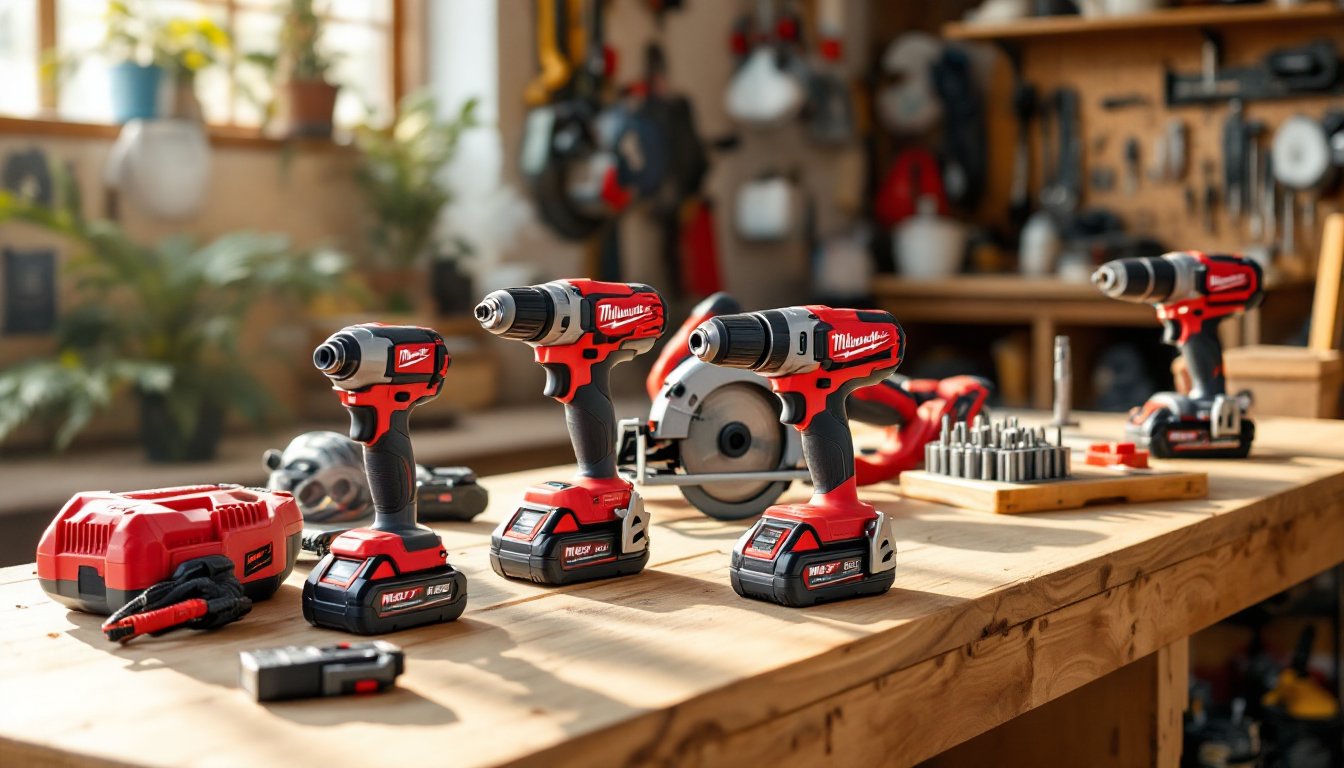
Interchangeable battery platforms save money and clutter. Milwaukee’s M18 ecosystem means every 18V tool shares the same batteries and charger. That simplification alone is worth choosing a unified brand instead of mixing DeWalt, Makita, and Ryobi across your garage.
LED work lights on drills and impact wrenches aren’t luxury, they’re functional. Most Milwaukee tools include them, reducing the need for a separate flashlight on every job.
Setting Up Your Milwaukee Cordless Workshop
Start with a 2-tool combo if your budget is tight: a drill-driver and an impact wrench. Add a second battery so one charges while you work. That covers 90% of fastening and drilling jobs on a car.
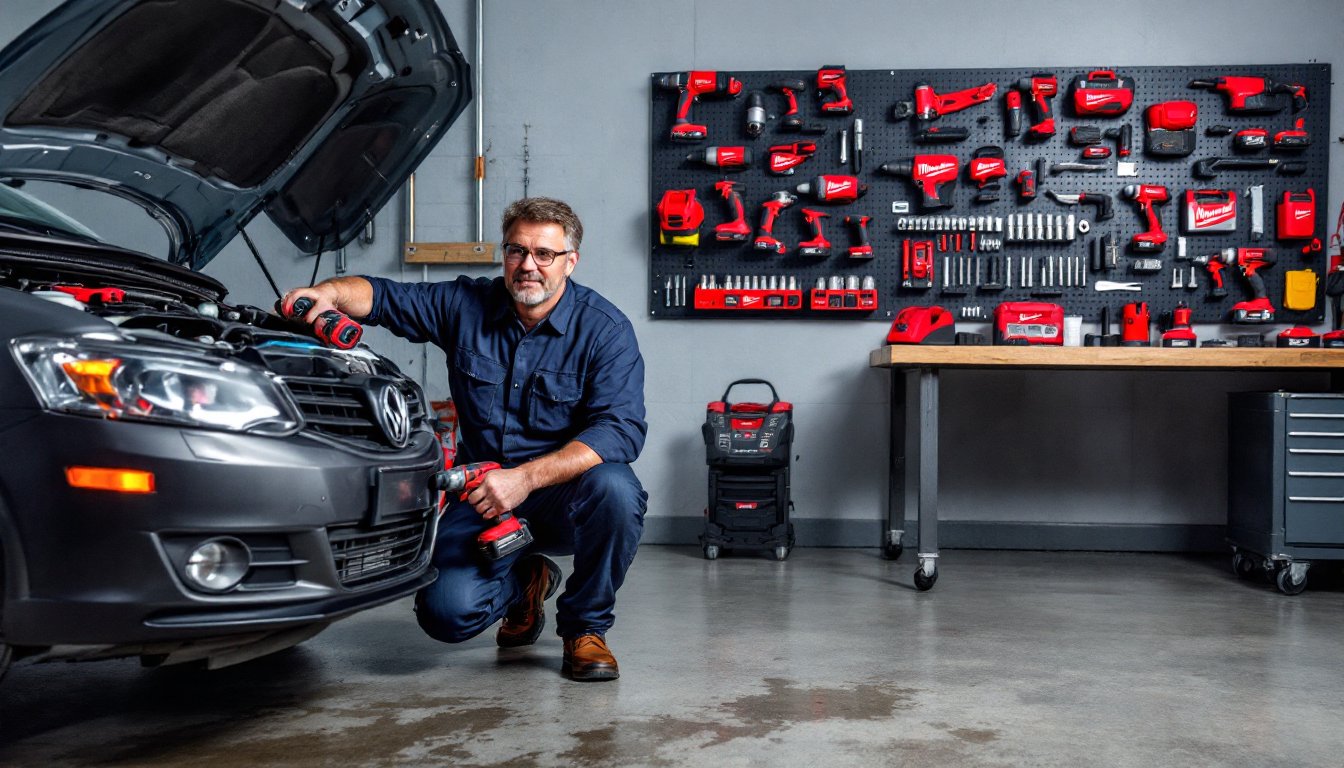
Invest in a dual-port charger that can charge two batteries simultaneously. Milwaukee’s standard chargers work fine, but dual-port cuts idle time and keeps your workflow moving. Store tools in a tool bag or wall-mounted organizer, Milwaukee makes branded storage that fits their batteries and chargers, but any durable bag works.
Safety is non-negotiable. Wear safety glasses whenever you’re using any power tool, and wear hearing protection during impact wrench or grinder use (they’re loud). Keep nitrile gloves handy for oily work, and use a respirator mask if you’re grinding or creating dust clouds. Store batteries in a cool, dry spot, heat degrades lithium-ion packs quickly.
Stock essential bits and sockets. Milwaukee makes quality drill bits and impact sockets: buy them once and they’ll outlast cheaper sets. A basic set of metric and SAE sockets covers most automotive work.
For ongoing learning and detailed how-to instructions on auto repairs, resources like Instructables provide step-by-step project tutorials that pair well with having the right tools on hand. Consider Today’s Homeowner for seasonal maintenance checklists that help you plan bigger repair projects and tool investments.
Automotive Workshop Tools List offers a comprehensive breakdown of tools organized by repair category, helping you decide which cordless tools fit your most frequent jobs.
Conclusion
Cordless tools have moved beyond convenience into necessity for anyone doing regular auto work at home. Milwaukee’s lineup delivers the runtime, power, and reliability that makes weekend wrenching genuinely enjoyable instead of a cord-untangling headache. Start with a solid impact wrench and drill-driver, invest in batteries and a good charger, and build from there. Your future self, the one who’s not chasing extension cords across the garage, will thank you.