If you’ve invested in Milwaukee tools, you already know they’re built to handle the toughest jobs. But even the best power tool sits useless without the right battery in its pack. Milwaukee’s battery lineup has expanded dramatically over the past few years, and with different voltage systems, capacities, and technologies now available, understanding what you actually need can feel overwhelming. This guide breaks down Milwaukee batteries in plain language, no jargon salad, so you can spend less time researching and more time building.
Table of Contents
ToggleKey Takeaways
- Choose M18 batteries for most home improvement projects due to their balance of power and versatility across Milwaukee’s tool ecosystem, while M12 batteries excel for lightweight, specialized work in tight spaces.
- Battery capacity in amp-hours (Ah) directly impacts runtime and weight—2.0-3.0 Ah suits occasional homeowners, while 5.0+ Ah batteries justify the premium for extended projects or heavy daily use.
- Invest in a fast charger if you work longer than a few hours, as charging solutions that deliver 80% capacity in 30 minutes prevent downtime and significantly improve project efficiency.
- RedLithium batteries cost 20-30% more than standard batteries but deliver extended runtime and superior cold-weather performance, making them worthwhile for professionals and frequent users.
- Store batteries for Milwaukee tools in cool, dry conditions and maintain clean contacts to prevent degradation; three-year warranty coverage and recycling programs ensure long-term value.
- Refurbished Milwaukee batteries offer 30-40% savings with full warranty protection, making them a smart budget option compared to unknown brands or heavily discounted alternatives.
Understanding Milwaukee Battery Types and Voltages
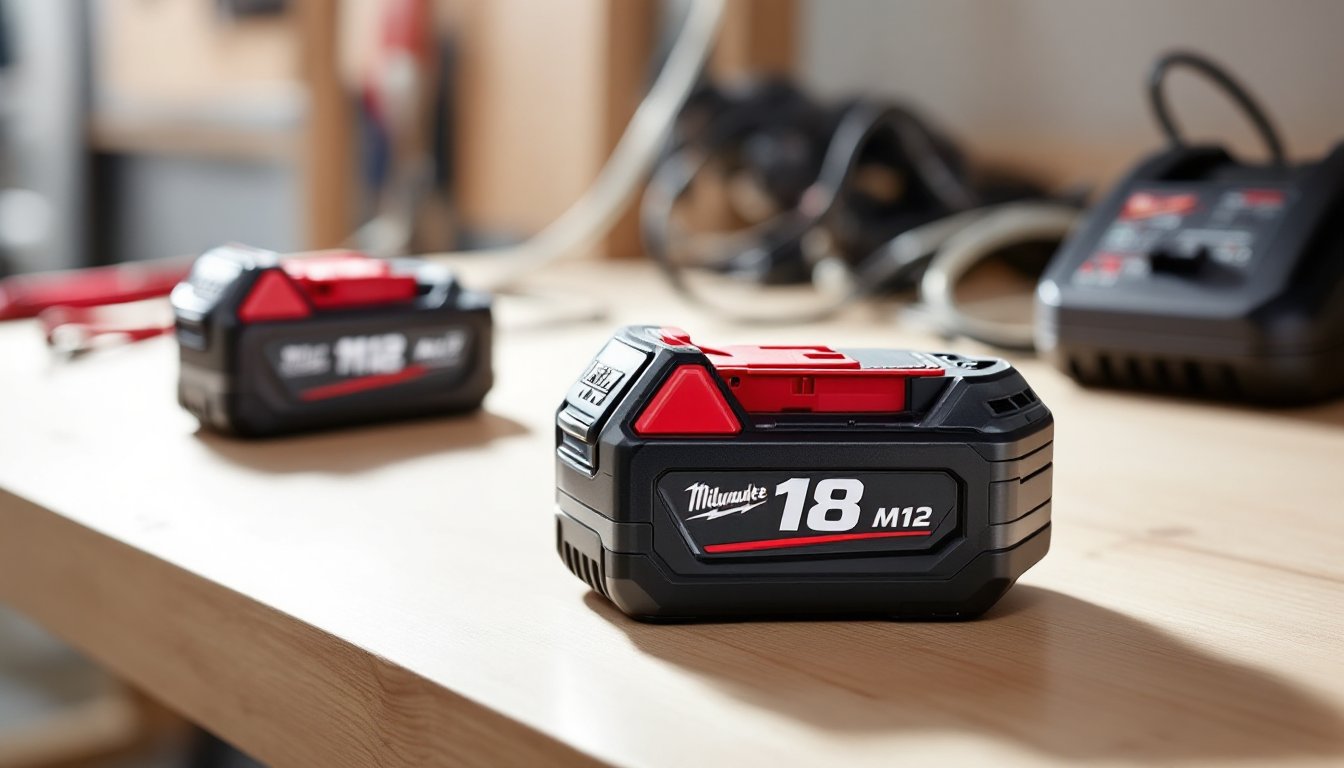
Milwaukee makes batteries in two main voltage platforms: M18 (18 volts) and M12 (12 volts). Think of voltage like the engine size in a car, higher voltage means more power, longer runtime, and ability to run bigger tools. M18 batteries are Milwaukee’s workhorse. They power mid-sized drills, impact drivers, circular saws, and most of the tools homeowners actually reach for. M12 batteries are the compact option, designed for lighter-duty work, one-handed tools, and tight spaces.
Neither is objectively “better.” It depends on what you’re doing. An M18 drill will drive 3-inch fasteners all day without breaking a sweat. An M12 will handle interior door hinges, cabinet work, and drywall screws, but asking it for heavy applications creates battery strain and shorter runtimes. Some projects demand M18: others reward you for choosing the lighter M12.
M18 and M12 Battery Systems Compared
M18 batteries have dominated the Milwaukee market because they balance power and practicality. A single M18 battery runs tools ranging from sanders to chainsaws. M12 tools are purpose-built: compact flashlights, angle grinders, band saws, and specialty tools that need to fit in tight spots or reduce fatigue on overhead work.
Cross-compatibility within each platform means an M18 battery works in any M18-compatible tool, and same for M12. If you own multiple M18 tools already, buying another M18-powered tool is a no-brainer, you share batteries and chargers. But jumping between platforms means doubling your charging infrastructure.
Cost-wise, M18 systems cost slightly more upfront, but if you’re building a toolkit, you’ll buy more M18 tools over time because the power covers 80% of home improvement work. M12 shines if you have a few specialized lightweight tools or you already committed to that ecosystem.
How to Select the Right Battery Capacity for Your Projects
Battery capacity is measured in amp-hours (Ah). A 4.0 Ah battery stores twice the energy of a 2.0 Ah battery. Here’s the honest reality: more amp-hours means longer runtime before you need to swap batteries, but it also adds weight and costs more money.
For occasional homeowners running a tool for 15–20 minutes, a 2.0 or 3.0 Ah battery is plenty. A weekend deck-building project, hanging shelves, or assembling furniture? You won’t drain a 3.0 Ah before quitting time. But if you’re spending a Saturday running a nailer, drill, and impact driver in rotation, you’ll appreciate having multiple batteries and a fast charger.
Milwaukee also makes 5.0 Ah, 6.0 Ah, and even larger batteries for extended jobs. Professionals framing houses or landscapers running trimmers and blowers all day benefit from bigger packs. Homeowners installing a fence or renovation work spanning multiple days justify the premium.
Matching Amp Hours to Job Duration and Tool Demands
Think of amp-hours as your fuel tank. A drill consumes battery differently than a circular saw. Cordless saws, angle grinders, and impact drivers draw more current and drain batteries faster. A 3.0 Ah battery might run a drill for an hour but only 20 minutes of continuous sawing.
Milwaukee publishes runtime estimates on tool spec sheets, look for the Ah rating and runtime pairing. If a spec says “40 minutes on 3.0 Ah,” assume closer to 25 minutes in real conditions (temperature, motor load, and wear reduce that estimate). Budget conservatively.
For multi-tool jobs, own at least two batteries. One charges while you work with the other. Milwaukee’s fast chargers (some models hit 80% in 30 minutes) are worth the investment if you’re working longer than a few hours. Waiting for a slow charger wastes more time than the upfront cost.
Battery Compatibility and Milwaukee Tool Ecosystems
Milwaukee’s ecosystem is one of its biggest strengths. Every M18 battery fits every M18 tool, period. The same connector type, the same software in the batteries that communicates with compatible chargers, and the same warranty coverage. Step outside M18, and you’re in M12 territory with identical compatibility within that platform.
But there’s a catch: M18 batteries will not power M12 tools, and vice versa. Some users assume they can use an adapter, nope. The voltage and connector design prevent it. This is by design for safety and performance reasons.
A few specialty Milwaukee batteries exist, RedLithium batteries and FUEL series tools promise extended runtime and better temperature performance. RedLithium batteries use different chemistry and last longer between charges, especially in cold weather. FUEL tools are brushless motors paired with optimized batteries for maximum efficiency. If you’re comparing Milwaukee M18 prices, you’ll notice RedLithium options cost more, usually 20–30% premium. For homeowners, standard batteries handle most work fine. Professionals and heavy users often justify RedLithium for the endurance and reliability.
When you buy a new Milwaukee tool, check whether it comes as a bare tool or a kit. Kits usually include a battery and charger, making them excellent value for first-time buyers. Adding a second battery to your collection costs less than buying a kit again.
Charging Solutions and Maintenance Best Practices
Milwaukee includes a standard charger with most kits, but it’s worth understanding the options. A basic charger takes 60–90 minutes to fully charge. Milwaukee’s fast chargers cut that to 30–45 minutes. If you’re running tools seriously, a fast charger pays for itself in time and frustration.
Store batteries in a cool, dry place. Extreme heat and cold reduce lifespan and runtime. A garage or workshop is fine: leaving batteries in a hot truck bed or freezing shed for months degrades chemistry. Milwaukee batteries include indicator lights showing charge level, don’t let them sit drained for weeks. Charge before long storage.
Cleaning the battery contacts with a dry cloth occasionally prevents corrosion and connection issues. Don’t use water or solvents. If a battery feels warm after charging or use, that’s normal. If it’s too hot to hold, something’s wrong: stop using it and let it cool before troubleshooting.
Milwaukee batteries carry a three-year warranty covering defects. Real battery failure is rare if you follow basic care. Most people mistake normal discharge (leaving a battery unused for months) for failure. Use your batteries regularly, and they’ll last years. When a battery does fade, modern Milwaukee recycling programs accept old packs, some retailers offer trade-in discounts, too.
Cost-Effectiveness: When to Invest in Premium Batteries
A standard M18 battery kit (18V, 2.0 Ah, and charger) runs around $99–$150. Adding a second 3.0 or 5.0 Ah battery costs $60–$130, depending on capacity. These are not impulse purchases, but they’re honest investments in a system you’ll use for years.
When building a toolkit, buy batteries only for tools you already own or have concrete plans to use. Stocking up on batteries “just in case” wastes money. But if you’re committed to Milwaukee, and many homeowners are after one good power drill, buying a second battery and fast charger early saves frustration and time during projects.
Premium RedLithium and FUEL series batteries cost 20–50% more but deliver better performance in demanding use. If your projects are occasional (4–8 hours per month), standard batteries are fine and cheaper. If you’re running tools regularly or in cold climates where battery performance matters, the premium pays back in reliability and runtime.
Refurbished batteries, sold by Milwaukee directly, cost 30–40% less than new and include the full warranty. If budget is tight, refurbished options give you capacity without the premium. Avoid heavily discounted unknown-brand batteries: chemistry and safety matter with lithium-ion packs. Stick with Milwaukee, DeWalt, Makita, or other reputable brands, the few dollars you save aren’t worth a failed battery mid-project or safety risk. How to choose a high-voltage cordless tool system depends on your specific needs and long-term toolkit strategy.