Whether you’re breaking up an old patio, drilling anchor holes for a mounted shelf, or cutting through concrete to install a new doorway, the right tools make the difference between a smooth weekend project and a frustrating marathon. DeWalt concrete tools have earned a solid reputation among both pros and serious DIYers for durability and consistent performance. In this guide, we’ll walk through the essential DeWalt concrete equipment you need, how to choose the right tool for your specific project, and how to keep them running strong for years to come. If you’re tackling concrete work for the first time, you’ll find straightforward advice on what actually matters, and what you can skip.
Table of Contents
ToggleKey Takeaways
- DeWalt concrete tools combine professional-grade durability with user-friendly ergonomics, making them ideal for DIYers tackling projects from demolition to precision cutting.
- Choose the right tool for your specific task—saws for cutting, rotary hammers for breaking, and percussion drills for fastener holes—and match the tool’s power to your project’s scale and scope.
- Proper bit and blade selection is critical: diamond blades excel on concrete, carbide-tipped blades work better on brick, and SDS-Plus and SDS-Max shanks are not interchangeable.
- Regular maintenance—cleaning dust from vents, protecting the SDS shank from corrosion, and replacing dull bits promptly—extends tool life and prevents safety hazards like motor overheating.
- Always check local building codes and permits before cutting into structural elements like basement floors, as code violations can create liability and structural issues.
- Invest in proper safety gear including ANSI-rated glasses, respirators for silica dust protection, and hearing protection whenever operating DeWalt concrete tools.
Why DeWalt Concrete Tools Stand Out for Home Improvement
DeWalt’s concrete tool lineup appeals to DIYers because the company balances professional-grade durability with features that don’t require a contractor’s training manual. Their concrete saws, rotary hammers, and impact drills are engineered with heavy-duty motors and reinforced chucks, the rotating part that holds bits, designed to handle repeated impacts without stripping or wear. The brand also invests in ergonomic design: a concrete tool you’re gripping for two or three hours matters when it comes to fatigue and accuracy.
Many DeWalt concrete tools integrate with the same battery platform, which matters for your wallet. If you already own a few DeWalt power tools, adding a concrete-focused drill or saw doesn’t mean buying a new charging system. Their corded options offer unlimited runtime for marathon grinding or cutting jobs, a real advantage when you’re working on concrete stairs or a large slab. Warranty support and parts availability are solid across North America, so if something breaks mid-project, replacements are usually within arm’s reach.
Essential DeWalt Concrete Tools Every DIYer Should Know
Concrete Saws and Cutting Tools
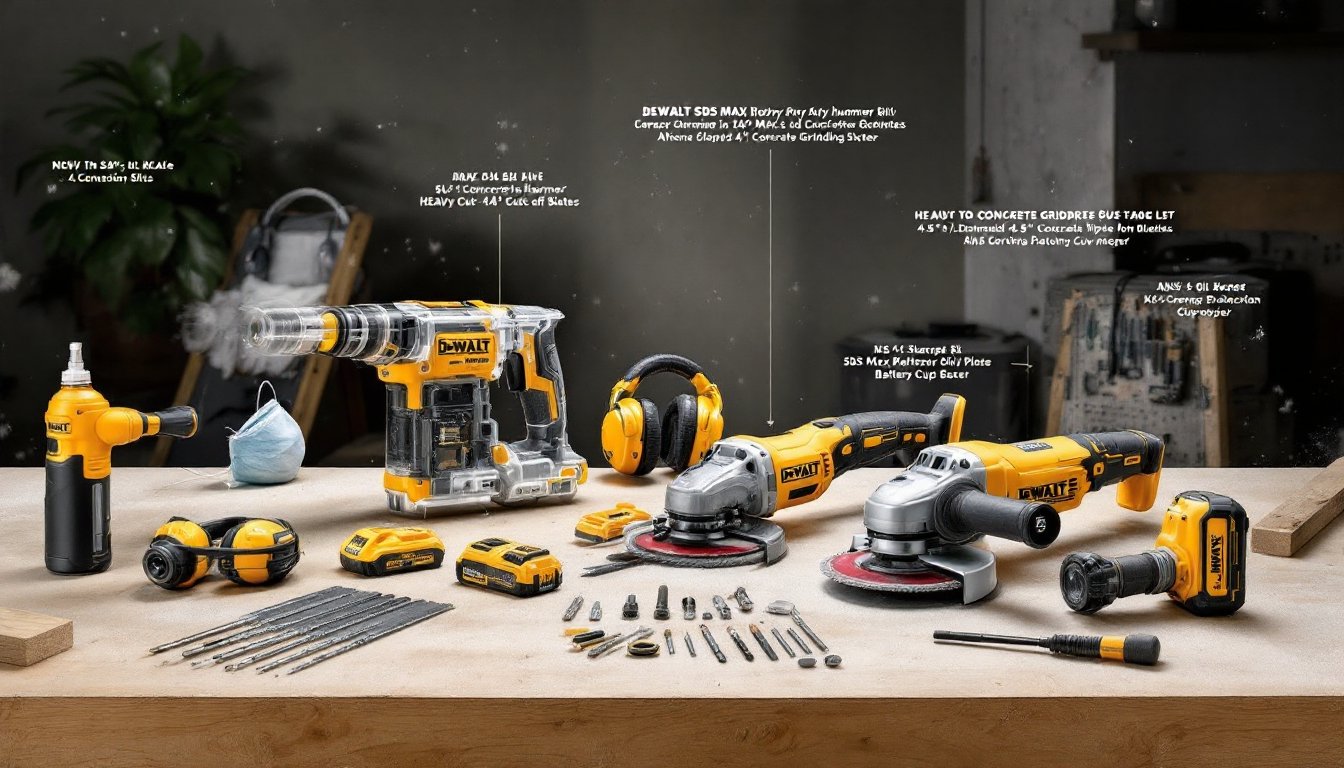
A concrete cut-off saw (also called a chop saw or abrasive saw) is the workhorse for straight cuts through concrete, brick, or cinder block. DeWalt’s compact concrete saws, typically 14-inch blade models, deliver clean cuts with minimal chipping when used with the right blade, diamond-grit blades for concrete, carbide-tipped for brick. These saws run wet or dry, though wet cutting (with a water recirculation system) reduces dust and extends blade life significantly.
For larger jobs, a hand-held angle grinder paired with a concrete grinding cup wheel tackles surface prep, smoothing rough edges, and grinding down high spots on concrete floors. A 4.5-inch or 5-inch angle grinder is portable enough for DIY use and powerful enough for real work. Always wear ANSI-rated safety glasses, a dust mask or respirator, and hearing protection when operating any concrete saw or grinder, silica dust from concrete is a serious health hazard and requires respiratory protection.
DeWalt’s circular saws with masonry blades work for shallow cuts in concrete or for scoring lines before hand chiseling, though they’re not ideal for deep cuts. For precision edge cuts on concrete countertops or tile, a wet tile saw is more appropriate, but that’s beyond the typical DeWalt concrete lineup.
Drills, Breakers, and Demolition Equipment
A rotary hammer drill is the bridge between a standard drill and a jackhammer. DeWalt rotary hammers use a piston mechanism to deliver thousands of micro-impacts per minute, allowing you to drill into concrete quickly without bogging down like a regular hammer drill would. A 1-inch SDS-Max rotary hammer handles anchor holes, masonry fastener installation, and small demolition work without requiring a second person to operate.
For demolition and concrete breaking, a SDS-Plus breaker chisel attached to a rotary hammer removes mortar, breaks tile, or chips away concrete edges. The shank design (the part that locks into the hammer) fits snugly without wobbling, critical for safety and precision on overhead work.
If you’re drilling many holes for fasteners, a percussion drill (sometimes called a hammer drill, distinct from the rotary hammer) is lighter and more controlled for driving fasteners into concrete. DeWalt’s compact impact drills with SDS-Plus bits offer enough power for typical anchor holes without the size or weight of a full rotary hammer.
For anchoring heavy shelves or equipment to concrete, you’ll need the right concrete fasteners: wedge anchors, drop-in anchors, or powder-actuated fasteners depending on load and hole type. Always check fastener ratings against the weight you’re supporting, never guess on load-bearing anchors.
Choosing the Right Tool for Your Project
Start by defining your concrete task clearly. Are you cutting, breaking, drilling, or grinding? A cutting job needs a saw: a demolition job needs a rotary hammer: fastener holes need a percussion drill. Scale matters too. A small kitchen backsplash tile removal is different from breaking out a concrete step or resurfacing a basement floor.
Consider the best DeWalt drills for concrete work, which pair ergonomics with real power. For small jobs (three to five anchor holes, light scoring), a compact SDS-Plus drill is overkill: a standard drill with a masonry bit works fine. For jobs involving ten or more holes, deeper than 1 inch, or frequent use, invest in a rotary hammer, your wrists will thank you.
Bit and blade selection is just as critical as the tool itself. A diamond blade cuts concrete and stone cleanly but dulls quickly on brick. Carbide-tipped blades handle brick and block better. SDS-Plus and SDS-Max bits are not interchangeable, check your rotary hammer’s shank size before buying bits.
Permits and code matter. Cutting into a basement floor slab might require a structural engineer’s sign-off, especially in older homes where plumbing or electrical runs under the slab. Check with your local building department before making your first cut. According to the IRC (International Residential Code), structural modifications often require permits, and concrete cutting falls into that category in most jurisdictions.
Maintenance Tips for Long-Lasting Performance
Concrete dust is abrasive and will wear out your tools fast if left unchecked. After every use, blow out or vacuum the motor vents, chuck, and any accumulated dust using compressed air or a dry-brush attachment. A clogged motor vent forces the motor to run hot and shortens bearing life.
For rotary hammers and drills, clean the SDS shank and collet (the gripping mechanism) regularly. Concrete dust and water can corrode the shank, causing slip during operation, a safety hazard. A dry cloth and occasional light oil (3-in-1 oil works fine) keeps the shank smooth.
Bits and blades dull, and dull tools work harder and overheat. Replace diamond blades when they stop cutting cleanly: a dull blade forces you to push harder, wearing the motor. Concrete bits wear faster than wood bits, so rotate bits and monitor for flattening at the tip. A sharpening service exists for some bits, but for DIY use, replacement is usually cheaper.
Store tools in a dry space, away from wet concrete dust or moisture, which accelerates corrosion on metal parts. Battery-powered DeWalt tools should be stored with batteries partially charged (around 30–50% capacity) and out of extreme heat or cold.
For corded tools, inspect the power cord before each use for cuts, cracks, or exposed wire. A damaged cord is both a fire hazard and an electrical shock risk. Replace cords immediately or retire the tool. If you’re working outdoors or on wet concrete, use a GFCI-protected outlet (ground fault circuit interrupter), a safety device that cuts power if moisture is detected.
Conclusion
DeWalt concrete tools deliver the performance and reliability that serious DIYers need for real work. By choosing the right tool for your task, using the correct bits and blades, and maintaining your equipment, you’ll complete projects safely and efficiently. Start small if you’re new to concrete work, invest in safety gear, and don’t hesitate to call a professional if the job involves structural work or requires a permit.