When you’re standing in a workshop deciding which drill, saw, or sander to bring home, the “Made in USA” label carries real weight. American-made power tools represent a commitment to durability, repairability, and supporting domestic manufacturing. In 2026, as supply chain pressures persist and overseas production quality varies widely, more DIYers and professionals are choosing to invest in American-made power tools. These tools often deliver better long-term value, easier access to replacement parts, and warranty support from companies with skin in the game locally. Whether you’re building a workshop from scratch or upgrading existing equipment, understanding why domestic brands matter, and which ones deliver, can transform how you approach every project.
Table of Contents
ToggleKey Takeaways
- American-made power tools offer superior durability and repairability through stricter quality control, local warranty support, and readily available replacement parts across the country.
- Expect to pay 15–30% more for domestic-manufactured tools versus imported equivalents, but the long-term value retention and fewer breakdowns justify the upfront investment.
- Build your DIY workshop around 6–8 core essentials—drill-driver, circular saw, reciprocating saw, miter saw, sander, jigsaw, hammer, and level—then rent specialty tools as projects demand.
- Battery compatibility matters: standardizing on one platform (Milwaukee M18, DeWalt 20V, or Makita 18V) eliminates charger duplication and maximizes tool ecosystem flexibility.
- Proper maintenance—including storing batteries at 40–50% charge, keeping cutting surfaces clean, wearing PPE consistently, and using quality bits and blades—extends tool life and prevents costly repairs.
Why American-Made Power Tools Stand Out
Understanding the Benefits of Domestic Manufacturing
American-made power tools aren’t automatically superior just because of their origin. The real advantage lies in what domestic manufacturing enforces: stricter quality control, local warranty accountability, and the economics of domestic service networks. A tool built in the US typically has closer oversight of tolerances and material standards than equivalent imports: manufacturers face liability in their home market.
Repairability is a game-changer for serious DIYers. When a bearing seizes in an imported drill press, sourcing a replacement bearing from overseas can take weeks. With American brands, replacement parts sit in warehouses across the country, and you’re not competing with shipping delays. Craftsman, for instance, still manufactures key drills and saws domestically and maintains parts availability that frankly outpaces many competitors.
Resale value matters too. A Milwaukee M18 drill holds its value better than a budget offshore equivalent because buyers trust the brand’s repair infrastructure and know replacement batteries are readily available. Whether examining made in the USA tools and their reliability, the pattern is clear: domestic production correlates with long-term value retention.
There’s also the labor angle. American manufacturers employ engineers, machinists, and assemblers in the US, paying wages that support local economies. That’s not a marketing gimmick, it’s why your tool costs more upfront but performs consistently and lasts longer.
Costs vary by region, market, and product tier, but expect to pay 15–30% more for a domestically made power tool versus a comparable import. For a homeowner running maybe 50 hours yearly, that premium might feel steep. For someone running 500+ hours, that investment pays dividends through fewer breakdowns and repair availability.
Top American-Made Power Tool Brands Worth Your Investment
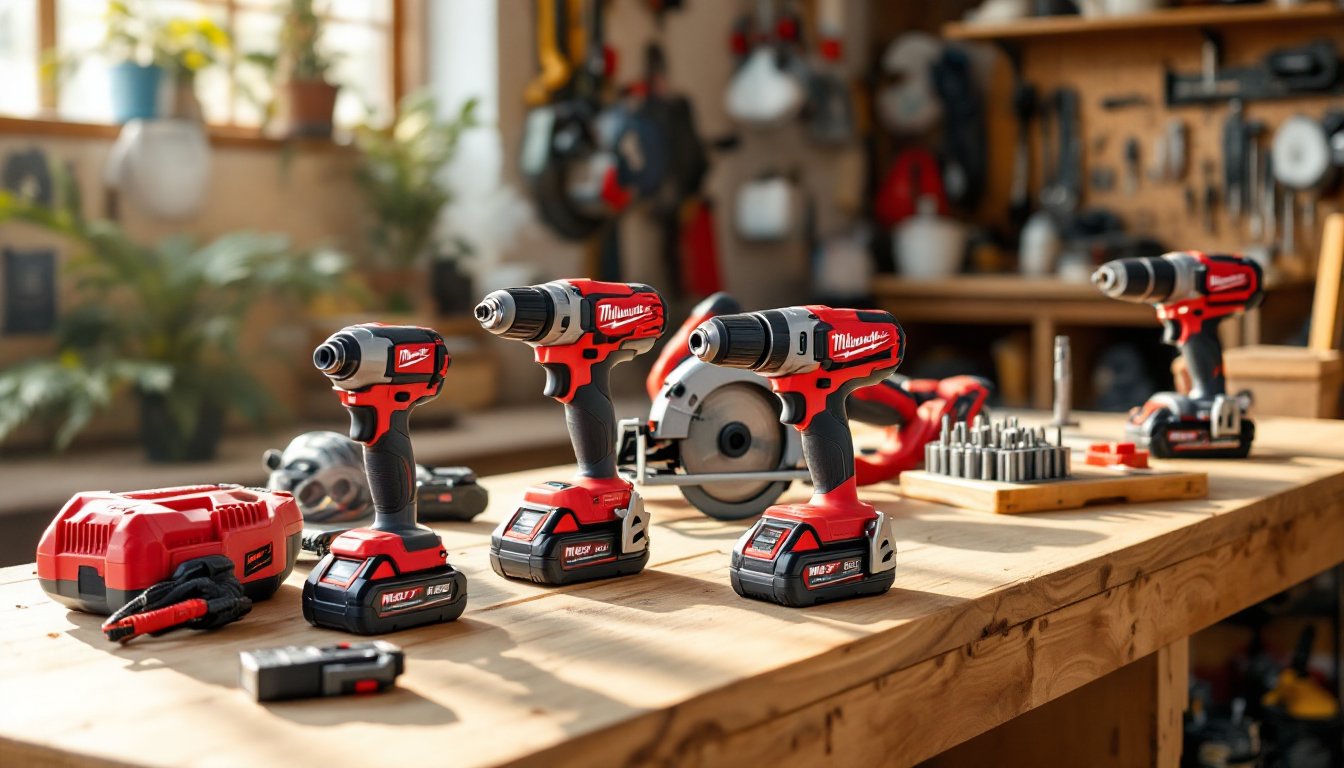
Milwaukee Tool remains a dominant force, manufacturing circular saws, impact drivers, and angle grinders in their Wisconsin facilities. Their M18 lithium platform has become a benchmark because parts interchangeability is seamless, batteries, chargers, and tool heads work across their entire ecosystem. You’re not locked into proprietary nonsense.
Festool operates US manufacturing plants and builds cabinet saws, sanders, and routers with obsessive precision. Their dust collection integration is unmatched, and their sanders excel at final finishing work where consistency matters. Premium pricing reflects that obsession, but they rarely disappoint on durability or part availability.
DeWalt manufactures many of its mid-range miter saws, chop saws, and stationary tools domestically, though their overseas production is substantial. Their compound miter saws, built in Mexico and the US, deliver solid reliability. Parts are universally available.
Makita has US production facilities and manufactures circular saws, impact drivers, and reciprocating saws domestically. Their XPH12Z 18V brushless drill represents the intersection of domestic manufacturing and smart design, lightweight, plenty of torque for wood framing, and the batteries last through a full day of use.
Graco manufactures paint sprayers and finishing equipment in the US, with factories across multiple states. If you’re doing interior finishing work, their airless sprayers eliminate the frustration of brush marks and thin coverage.
Snap-on produces premium hand tools and diagnostic equipment domestically, though their power tool offerings are more limited. Their ratchets and sockets remain workshop standards because they simply don’t fail.
When evaluating brands, check the manufacturer’s website for production location. “Assembled in USA with domestic and imported parts” means something different than fully domestic manufacturing, but it’s still a step above fully imported. The warranty length and parts availability matter as much as the manufacturing origin.
Building a Workshop With Domestic Brands
Essential Tools for DIY Enthusiasts
You don’t need 50 tools to handle most home projects. Start with the essentials, then expand based on what your projects demand. For framing and structural work, a 18V brushless drill-driver forms the backbone, drives fasteners, mixes paint, and handles drilling through studs and joists without hesitation. Pair it with a 6.5″ circular saw for cross-cutting lumber and a reciprocating saw for demolition and cutting through walls (necessary when routing electrical runs or plumbing).
Adding a miter saw transforms your ability to cut trim and framing lumber at precise angles. A 10″ sliding compound miter saw handles standard stock without needing a second setup, essential for baseboards, crown molding, and rafter cuts. Rental stores stock these if you’re hesitant about purchasing.
For finishing and prep work, an orbital sander removes paint, levels joints between boards, and smooths surfaces before staining or painting. Use 120-grit sandpaper for heavy removal and 220-grit for final prep before finishes. A random-orbit sander excels here because the spinning pad minimizes visible swirl marks.
A jigsaw cuts curves and makes plunge cuts into drywall without drilling pilot holes first. Invaluable for cutouts around outlets and irregular shapes. A 16oz claw hammer and torpedo level round out fundamentals: levels verify that studs are plumb and joists are level before fastening.
Safety equipment often gets skipped until something goes wrong. Wear ANSI Z87.1-rated safety glasses whenever operating power tools: flying debris from nail blow-out or splintering wood causes more injuries than people admit. Dust masks rated N95 or better protect against sawdust inhalation during sanding and cutting. Ear protection (foam or muff-style) prevents hearing loss in workshops where tools run 80+ decibels.
Battery-powered tools have mostly replaced corded models for woodworking and framing because the convenience outweighs the modest power loss. A good DIY beginner’s toolkit from Family Handyman walks through what projects actually demand versus what’s nice-to-have. Most homeowners get by with 6–8 core tools and rent or borrow for specialty work.
Common Mistakes When Choosing Power Tools
Buying cheap imports to save money upfront, then replacing them after a year, is false economy. You’ll spend $150 on a bargain drill, $200 replacing it, then $150 on another, totaling $500 before you buy a single American-made tool that costs $250 but runs for five years. The math is brutal once you factor in frustration and downtime.
Overbuying power and features you’ll never use is another trap. A full-size 12″ miter saw is overkill if you’re trimming baseboards and cutting plywood. A 10″ sliding compound miter saw handles 95% of residential work. Opt for what your actual projects need, not the contractor-grade machine next to it.
Ignoring battery compatibility is expensive. Buying tools across different battery platforms means carrying four chargers and four sets of batteries. Stick with one brand’s battery system (Milwaukee M18, DeWalt 20V, Makita 18V) and watch your flexibility and charging infrastructure grow without duplication. Most professionals have standardized this way for exactly this reason.
Skipping maintenance and storage leads to premature failure. A tool stored in a damp garage collects rust: one left in a hot truck bed sees battery degradation. A basic plastic tool chest with a locking lid costs under $100 and protects your investment far better than leaving tools scattered. Clean cutting surfaces on saws and sanders after use: dust buildup restricts airflow and creates fire risk.
Not reading the manual is surprisingly common. Manuals explain proper bit selection, battery charging cycles, and safety interlocks. A reciprocating saw has a depth-of-cut limit, exceeding it burns out the motor. An orbital sander has a pad speed specification: running it too fast on delicate trim can cause gouging. Ten minutes with the manual saves you from preventable mistakes.
How to Maximize Durability and Performance
Maintenance begins before you plug anything in. Check that your 120V outlet is grounded (three-prong or GFCI-protected) to prevent shock hazard, particularly in kitchens and bathrooms where moisture is present. Corded tools demand this baseline safety.
Keep cutting surfaces clean. A table saw blade coated in pitch and sawdust heats up, dulls faster, and creates kickback hazard. A blade cleaner or degreaser removes buildup: replace blades when they stop cutting cleanly or when you see burning marks on cut surfaces. A dull blade is a safety hazard, not an economy measure.
Batteries need respect. Lithium-ion batteries degrade faster if stored fully charged or fully discharged. Store them at 40–50% charge if your tool won’t be used for weeks. Heat kills battery life: a Milwaukee M18 battery sitting in a truck bed under Arizona sun loses capacity months faster than one stored indoors at room temperature. Chargers themselves can fail: if a battery won’t hold charge and you’ve verified it’s not fully depleted, the charger may be the culprit.
Use the right fasteners and bits. Running a drill bit meant for steel through hardwood generates heat and can snap the bit. A brad-point bit (also called Forstner or spade bit depending on depth and material) drills wood cleanly: twist bits work for metal and general purpose. Knowing the difference prevents broken bits and burned motors from resistance.
Wear PPE consistently. Safety glasses, dust masks, and hearing protection aren’t options after the first few uses, they’re part of the job. A flying splinter or sawdust in your eye isn’t a minor inconvenience: it can cause infection or permanent damage. Hearing loss is cumulative and irreversible: This Old House emphasizes this in their tool safety guides for good reason.
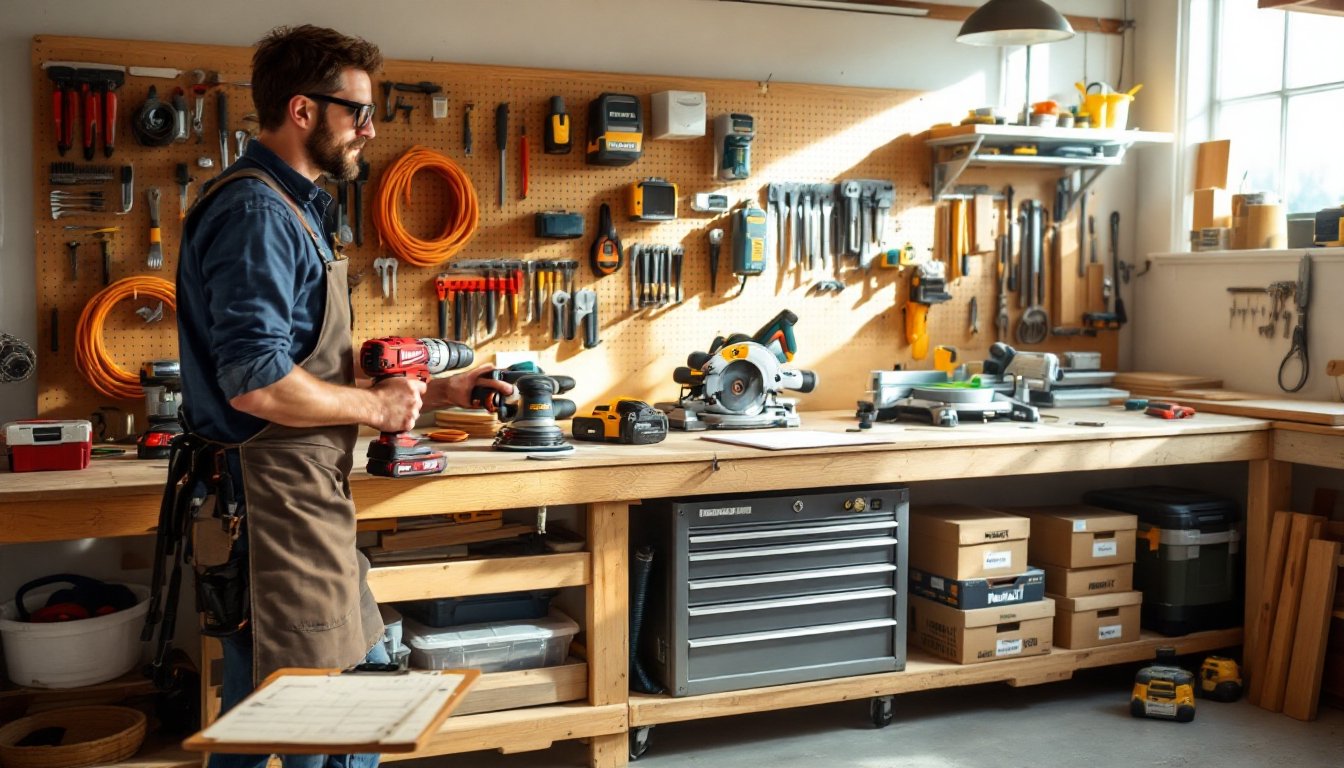
Store tools with intention. Hanging tools on pegboard or storing them in labeled drawers means you find what you need without frustration. A tool left in tall grass, then run over by a mower, is an expensive loss. Accidents happen, but most tool loss comes from poor storage habits.
Invest in quality bits and blades. A titanium-coated drill bit set costs more than basic steel but runs cooler, stays sharp longer, and rarely jams. A carbide-tipped circular saw blade for fine woodworking costs $40–60 but delivers crosscuts cleaner than a $12 blade and lasts through hundreds of cuts. Premium cutting tools don’t save time on every project, but on finish work and repetitive cuts, they’re worth every penny.