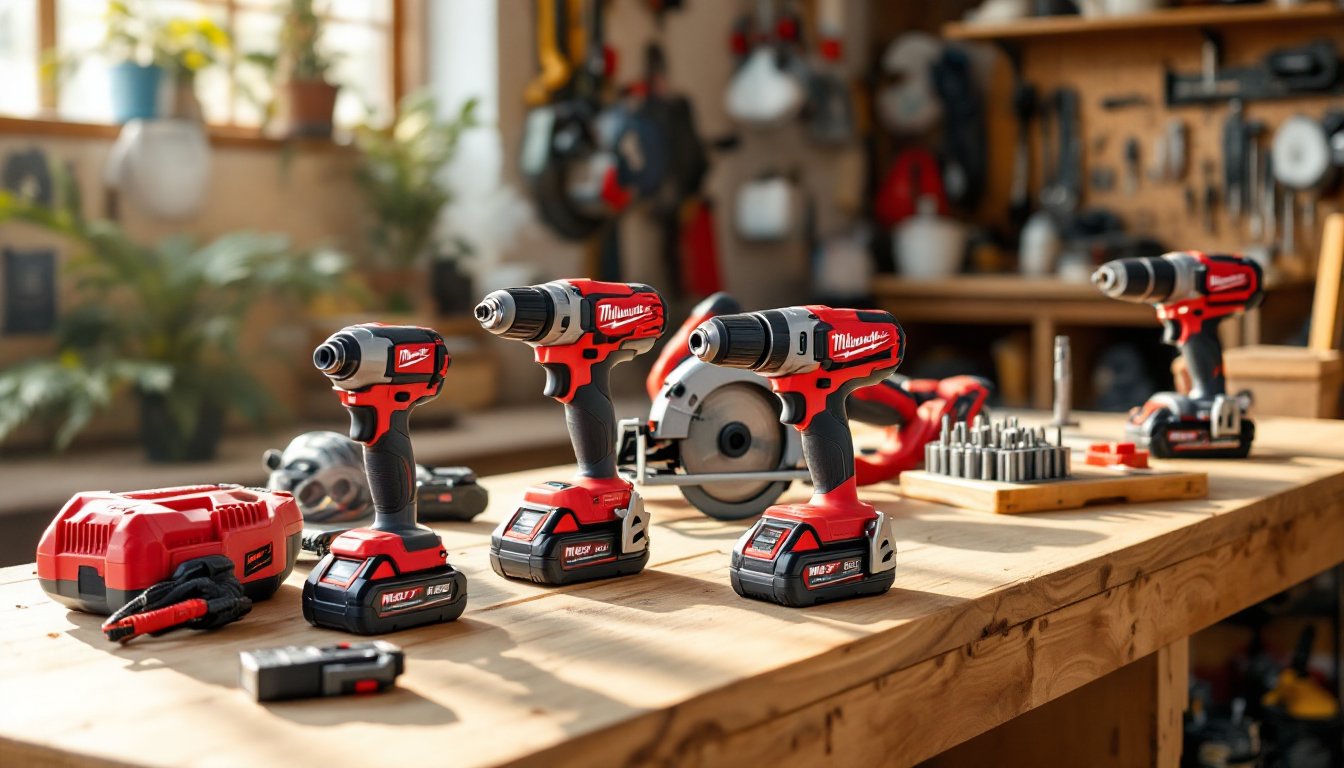
Walk into any serious DIYer’s workshop, and you’ll likely spot Milwaukee tools. Whether you’re framing a deck, assembling shelving, or tackling a bathroom remodel, Milwaukee has built a reputation for delivering reliable, durable equipment that actually stands up to real use. Unlike mass-market brands that feel flimsy after a few projects, Milwaukee tools are engineered for both homeowners taking on occasional jobs and enthusiasts who treat their workshop like a second home. The 2026 lineup includes options for every skill level and budget, from compact drill drivers for tight spaces to heavy-duty rotary hammers for concrete work. This guide walks you through the essential Milwaukee tools worth considering and how to build a functional collection without very costly.
Table of Contents
ToggleKey Takeaways
- Milwaukee tools stand out for homeowners and DIY enthusiasts due to their ergonomic design, brushless motor efficiency, and shared battery platform that reduces long-term costs.
- Start your cool Milwaukee tools collection with the essential trio: a power drill, impact driver, and circular saw—covering roughly 80% of home repair and light construction work for $400–500.
- Milwaukee’s M18 and M12 drill/driver options offer flexibility for different projects: choose M18 for heavy-duty framing and outdoor work, or M12 for lighter interior tasks and tighter budgets.
- Impact drivers deliver rapid rotational bursts that make fastening significantly faster than drills, but require proper grip technique to control torque and prevent wrist injury.
- Invest in higher-quality batteries upfront—a single 4.0Ah or 5.0Ah M18 battery charges faster and outlasts multiple starter batteries, making it a smarter long-term investment.
- For serious concrete and masonry work, a rotary hammer is necessary, but consider renting for one-time jobs rather than purchasing unless you have multiple heavy-duty projects planned.
Why Milwaukee Tools Stand Out for Homeowners and DIY Enthusiasts
Milwaukee’s appeal goes beyond brand loyalty. The company invests heavily in ergonomics, meaning their tools fit naturally in your hand and reduce fatigue during extended use, something that matters when you’re hanging drywall for six hours straight. Their brushless motors are more efficient and quieter than older brush-style designs, and the batteries hold a charge longer between projects.
Redundancy is another draw. Many Milwaukee tools fit the same battery platform, so once you own a couple of M18 or M12 batteries, you’re not buying expensive batteries for every new tool. A single 18V M18 battery powers everything from drills to angle grinders in their ecosystem. This also cuts down on clutter in a home workshop where space is tight.
Build quality shows in small details: chuck tightness after years of use, trigger responsiveness, and dust seals that actually work. Milwaukee also backs their tools with solid warranties and readily available replacement parts, no hunting online for an obscure gear or bearing.
Best Milwaukee Power Drills for Home Projects
A power drill is often your first purchase, so picking the right one matters. Milwaukee’s M18 Compact Drill/Driver strikes a balance between power and portability. At roughly 3.6 pounds, it’s light enough for overhead work without causing shoulder burn. The compact chuck accepts standard ¼-inch bits, and two-speed transmission (0-450 rpm for driving, 0-1,500 rpm for drilling) handles both fastening and hole-making without making you babysit the trigger.
For heavier lifting, framing, deck building, repetitive fastening, the M18 Drill/Driver with a full-size handle gives you more torque and a wider grip for stability. The longer battery provides extended runtime, which matters when you’re driving 100 exterior deck screws in a row.
If your budget is tighter, the M12 Compact Drill/Driver delivers surprising punch in a smaller package. It’s ideal for interior work, cabinet assembly, and light demolition. The M12 batteries are lighter and faster to charge, though they don’t last as long on a single charge. For homeowners doing occasional projects, M12 is often enough.
Key spec to check: chuck size. Most Milwaukee drills use a ½-inch chuck, which grips larger bits securely. Avoid cheaper drills with sloppy chucks, a bit slipping mid-project wastes time and risks stripping fasteners.
Impact Drivers and Fastening Tools You’ll Actually Use
An impact driver is different from a drill. Instead of steady rotational force, it delivers rapid rotational bursts combined with downward force, making fastening almost effortless. If you’re building a deck, installing exterior trim, or assembling a fence, an impact driver cuts fastening time significantly.
Milwaukee’s M18 Compact Impact Driver is compact enough for one-handed use in tight spaces (under cabinet sinks, inside closets) but packs enough power for full-size fastening tasks. The quarter-inch hex chuck accepts standard impact-rated bits, and the no-load speed of 0-2,400 rpm handles ¼-inch fasteners through thick wood.
For homeowners on a budget, impact drivers offer better value than buying both a drill and a dedicated fastening tool. The M12 Impact Driver is lighter and works perfectly for interior framing and cabinet work, save the M18 version for outdoor projects where you’re driving 3-inch deck screws all day.
Warning: impact drivers can twist your wrist if you’re not prepared for the torque. Always maintain a firm grip and keep your thumb on the same side as your fingers (not wrapped around the handle). When you first use one, start with lighter fasteners to get a feel for the tool’s behavior.
Circular Saws and Cutting Tools for Precision Work
Cutting straight, clean lines separates amateur projects from professional-looking work. Milwaukee’s M18 Circular Saw uses a standard 7¼-inch blade and cuts through pressure-treated lumber and composite decking without bogging down. Cordless circular saws have come far, early versions felt underpowered, but modern designs match corded performance.
The saw’s electric brake is valuable. When you release the trigger, the blade stops within seconds instead of coasting for five more rotations, reducing the chance of accidentally cutting yourself or overshooting your line. The bevel adjustment is easy to tweak for 45-degree miter cuts.
For rip cuts (lengthwise along a board), a guide or clamp-on fence dramatically improves accuracy. Milwaukee sells aftermarket fences, but a $20 metal straight edge and two clamps work nearly as well. Always use a sharp blade, dull blades slow you down, waste battery, and produce ragged edges that require extra sanding.
For precision crosscuts (cutting boards to length), a miter saw is ideal, though it requires workshop space and a power outlet. If you’re doing one-off bookshelf cuts, a circular saw with a clamped straightedge is practical. Keep a dust mask nearby, circular saws throw a lot of sawdust, especially when cutting treated lumber.
Rotary Hammers and Heavy-Duty Options for Challenging Jobs
Rotary hammers enter the “serious work” category. If you’re drilling into concrete for anchors, masonry, or setting deck footings, a regular drill simply won’t work. Milwaukee’s M18 Rotary Hammer combines hammering action with rotation, powered by a piston mechanism that drives the bit into hard materials.
Key features: adjustable hammer rate (so you control impact intensity), a side handle for stability, and an SDS-plus chuck that accepts specialized bits designed for percussion work. The M18 model has enough power for foundation work, bathroom tile removal, and concrete hole drilling up to 1-inch diameter.
Weigh the decision carefully. A rotary hammer is loud, heavy (around 7 pounds), and tiring after extended use. For a one-time job, renting from a home center is smarter than buying. If you’re redoing a patio or building substantial structural changes, ownership makes sense.
Always wear safety glasses, hearing protection, and a dust mask when using a rotary hammer. The impact and vibration can cause hearing damage and concrete dust contains silica, a respiratory hazard. Wet drilling (with a water-fed bit) reduces dust significantly but adds complexity to setup.
Building Your Milwaukee Tool Collection on a Budget
Starting a collection without maxing a credit card requires prioritization. A drill, impact driver, and circular saw cover about 80% of home repair and light construction work. This combo runs roughly $400–500 with batteries included, depending on sales.
Invest in higher-tier batteries early. A single M18 4.0Ah battery or 5.0Ah battery costs more upfront but charges faster and lasts longer than starter batteries. One good battery beats owning three cheap ones. Watch for bundle deals during spring and holiday sales, Milwaukee bundles often drop the per-tool cost by 15–25%.
Skip tools you won’t use. Everyone thinks they need an angle grinder or oscillating multi-tool, then they sit unused. Start with what you’ll actually reach for within the first month. Specialists like tool set recommendations break down curated bundles for specific tasks, framing, finishing, electrical, so you’re not guessing.
Consider the second-hand market. Pawn shops, Facebook Marketplace, and estate sales often have older Milwaukee tools (often corded or NiCd battery models) at steep discounts. Older drill drivers and circular saws still work perfectly: their batteries are the weak point. Inspect chucks for wobble and run them briefly before committing.
Many professionals and advanced woodworking guides stress that quality tools are an investment, not an expense. A $150 Milwaukee drill outlasts two $75 discount-brand drills and resells easier if you ever need cash.
Conclusion
Milwaukee tools aren’t the cheapest option, but they’re built to survive a decade of real use. Start with the essentials, a drill, impact driver, and circular saw, and expand based on what projects come next. The battery ecosystem means each new tool you buy becomes an asset rather than a silo investment. By matching your tool collection to your actual project list, you’ll build a functional workshop that works as hard as you do.