If you’ve spent the last year watching DIY videos and stockpiling supplies, you’ve probably noticed one name keeps popping up: DeWalt. That’s not coincidence, it’s the result of decades of home improvers and professionals choosing the same brand for their toughest jobs. Whether you’re hanging drywall, building shelves, or cutting trim, DeWalt tools have become the standard-bearer for reliability and performance. This guide walks you through why ACME Tools recommends DeWalt for homeowners at every skill level, which tools deserve space in your workshop, and how to pick the right ones for your next project.
Table of Contents
ToggleKey Takeaways
- DeWalt dominates the market due to durability, ergonomics, and a unified battery ecosystem that allows multiple tools to share the same batteries and chargers.
- The DeWalt 20V MAX compact drill-driver and impact driver combo are essential entry-level tools for DIYers starting their ACME Tools collection.
- Circular saws, miter saws, and jigsaws round out a practical workshop, with each tool serving specific cutting needs from crosscuts to curved detail work.
- Successful tool selection depends on planning actual projects first, evaluating workspace constraints, and prioritizing ergonomics and comfort over buying everything at once.
- Mixing battery platforms creates job-site headaches—stick with DeWalt’s current 20V MAX standard for compatibility and long-term value.
- Quality tools from reputable retailers like ACME Tools cost less over time than replacing cheap alternatives, making upfront investment in durability worthwhile.
Why DeWalt Dominates the DIY and Home Improvement Market
DeWalt’s grip on the home improvement market comes down to three things: durability, ergonomics, and parts availability. When you’re in the middle of a Saturday afternoon project, the last thing you want is a tool that quits on you or doesn’t feel right in your hands after 20 minutes of use. DeWalt tools are engineered to handle repeated use without wearing out, and their motors are tough enough to power through dense materials without bogging down.
Another huge factor is the ecosystem. Most DeWalt drills, saws, and sanders use the same battery platform, meaning you can invest in one or two batteries and chargers, then buy additional tools knowing they’ll all work together. This approach saves serious cash compared to buying multiple battery systems. You’ll also find DeWalt parts and support at home centers, tool rental shops, and specialty retailers everywhere, if something breaks, replacement parts are usually available within days, not weeks.
The brand also has a reputation for listening to feedback. They’ve refined their designs based on what real users ask for: better grip angles, easier chuck systems, dust collection ports that actually work, and batteries that don’t die mid-project. That combination of performance and thoughtfulness is why homeowners stick with the brand once they’ve bought their first tool.
Essential DeWalt Tools for Beginner to Intermediate DIYers
Power Drills and Impact Drivers
A cordless drill is the first tool most DIYers buy, and the DeWalt DCD777C2 compact drill-driver is the entry point for good reason. It’s lightweight enough for overhead work, has enough power for basic fastening tasks, and won’t strain your wrist during extended use. The two-speed transmission (0-450 and 0-1,500 RPM) lets you control power depending on whether you’re drilling a pilot hole in soft pine or driving a screw into hardwood.
Once you’ve spent time with a basic drill, an impact driver becomes the next logical step, especially if you’re doing exterior work or fastening into composite materials. The DeWalt DCD778C2 combines a drill and impact driver in a compact package, giving you two tools in the space of one. Impact drivers deliver quick bursts of rotational force that help break fasteners loose and seat them quickly, cutting your work time in half on most fastening jobs. Unlike regular drills, they won’t twist your wrist if a screw suddenly catches.
For battery longevity, consider the 20V MAX system: these batteries outlast older formats and charge in under an hour with a modern charger. Beginners often ask whether to go cordless tools or stick with corded power, and the answer depends on your workspace. Cordless gives you freedom and fewer tangles, but corded tools never need charging.
Saws and Cutting Tools
A circular saw is the workhorse of any cutting operation. The DeWalt DCS391B runs on the same battery system as your drills, making it a natural second or third tool purchase. At 5.5 pounds, it’s light enough to handle overhead cuts (soffit trim, ceiling panels) without fatigue, and the motor has enough punch to power through 2x lumber and sheet goods. The bevel adjustment lever is easy to access, and the blade guard retracts smoothly without snagging.
If you’re planning on straight crosscuts or ripping dimension lumber, a miter saw is worth the investment. The DeWalt DWS779 12-inch miter saw delivers the clean, square cuts you need for trim work and framing. Miter saws beat circular saws for accuracy because the blade is guided by a stable arm, not your hand holding a moving tool. Most home projects, baseboards, crown molding, door casings, demand the precision a miter saw provides.
For detail work and curves, a jigsaw opens up whole categories of projects. You can cut circles for recessed lighting, notches around pipes, or curves in plywood for custom shelving. The DeWalt DCS334B has a tool-free blade change, meaning you’re not hunting for an Allen wrench in the middle of a cut. The orbital action setting lets you adjust how aggressively the blade moves, which helps you balance speed against surface finish.
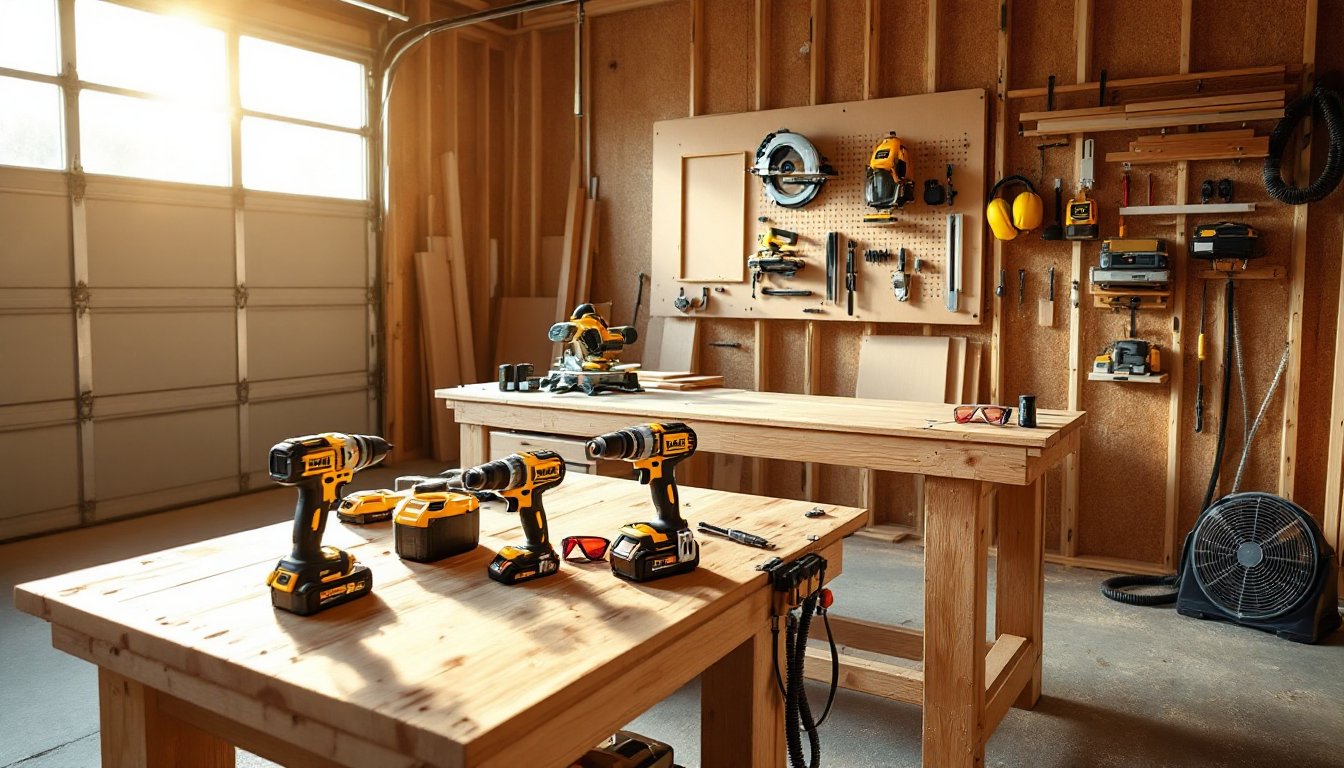
Before starting any saw work, wear safety glasses and hearing protection. Sawdust is inevitable, so a dust mask makes sense for longer sessions, and leather gloves protect your hands during material handling.
Choosing the Right DeWalt Tool for Your Project Needs
The temptation when building a tool collection is to buy everything at once, but that’s a recipe for wasted money. Start by listing the projects you’re actually planning to do in the next year. A homeowner tackling drywall repair, shelving installation, and fence staining needs different tools than someone building a deck or installing cabinetry.
Consider your workspace constraints too. Apartment dwellers and folks with small garages benefit from compact, cordless tools that pack away easily. Homeowners with dedicated workshops and outdoor space might lean toward full-size stationary tools like a miter saw or bench grinder, which stay in one place.
Budget matters, but buying cheap tools to save money usually backfires. A low-cost drill that dies after two seasons costs more in replacement than spending 20% more upfront on something that lasts. ACME Tools can help you find the balance between features you actually need and premium options that may be overkill for occasional use. A tool set from a reputable source often bundles the essentials at a better price than buying tools individually.
Think about battery compatibility. DeWalt’s 20V MAX system is the current standard for most compact tools, but if you already own older DeWalt tools on a different platform, that affects which new tools make sense. Mixing battery systems creates headaches on the job site.
One overlooked factor is ergonomics. Visit a home center and hold tools in your hands. If you’re going to spend hours using a sander or circular saw, comfort matters as much as power. A tool that causes hand fatigue on hour two of a six-hour project becomes a regretted purchase fast. DeWalt tools generally score well on grip design and weight distribution, but individual preferences vary.
Resources like Family Handyman and This Old House offer project guides that specify which tools work best for different tasks. Reading through a few tutorials for projects on your list gives you a clear picture of what you actually need versus what looks cool in the store.
Don’t overlook tool sets that bundle essentials, since they often cost less than buying pieces separately and ensure your tools work together on the same battery platform. ACME Tools stocks multiple configurations to fit different skill levels and budgets, so you’re not locked into an all-or-nothing purchase.
Conclusion
Building a tool collection is a gradual process, not a sprint. Start with a quality drill and impact driver, add a saw or two based on your project roadmap, and expand from there. DeWalt tools earn their reputation through consistent performance and wide availability, making them a sensible choice whether you’re tackling your first wall repair or your tenth renovation. Quality tools make projects faster, safer, and frankly more enjoyable, because you’re solving problems instead of fighting your equipment.