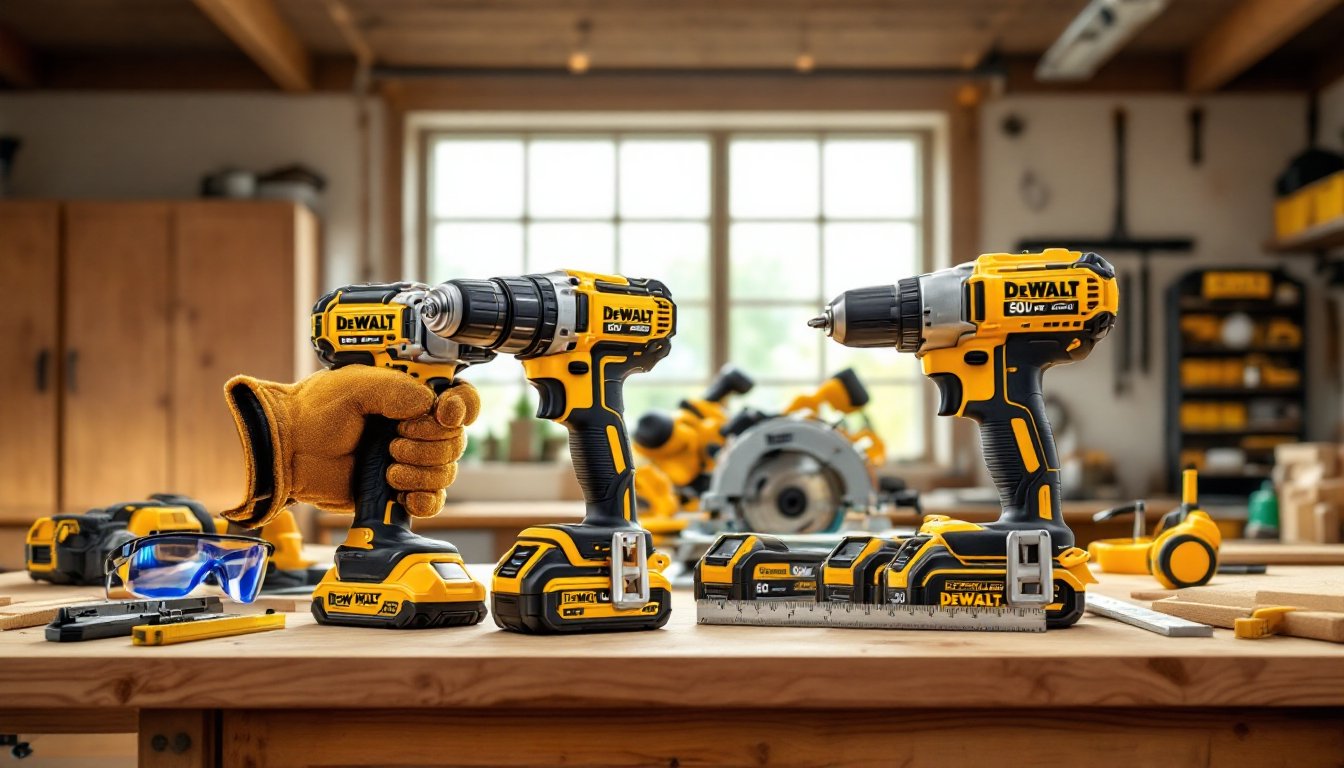
DeWalt 60V tools represent a major step up for homeowners ready to graduate from basic cordless drills. Unlike lighter consumer-grade systems, the 60V Flexvolt platform delivers the runtime, torque, and reliability that make real projects, decking, framing, cabinetry, heavy demolition, manageable without constant battery swaps or underpowered results. If you’ve hit the ceiling of what a 20V drill can do, or you’re tackling jobs where a corded tool feels cumbersome, this platform might be exactly what your workshop needs. Let’s walk through what makes these tools different, which ones earn their spot in a homeowner’s arsenal, and how to keep them running strong for years.
Table of Contents
ToggleKey Takeaways
- DeWalt 60V tools deliver roughly triple the power of 20V equivalents, making them ideal for serious homeowners tackling demanding projects like framing, decking, and heavy demolition.
- Flexvolt technology enables smart battery performance by automatically adjusting voltage based on tool demand, extending runtime and protecting battery life on extended jobs.
- The DCD777C2 drill and DCF887C2 impact driver are essential workhorses, while the DCS391D1 circular saw and DCS365D1 miter saw expand your cutting capabilities on the same battery system.
- A single 60V 6.0Ah battery charges in 40 minutes with a standard charger or 20 minutes with a fast charger, offering consistent power across multiple applications without frequent swaps.
- Proper maintenance—including dust cleaning, battery storage at 40–60% charge, and keeping tools in cool, dry conditions—maximizes the three- to five-year lifespan and prevents premature degradation.
Why DeWalt 60V Tools Stand Out for Serious DIYers
The jump from 20V to 60V isn’t just a marketing number, it’s a real performance difference. A 60V drill delivers roughly triple the power of a 20V equivalent, meaning faster drilling in dense material, better torque for driving fasteners, and less bogging down on tough jobs. The Flexvolt technology is the secret sauce here: these batteries automatically sense the tool’s demand and ramp voltage up or down, keeping consistent power while protecting battery life when you don’t need maximum output.
Runtime is another huge win. A single 60V battery can outwork multiple 20V batteries on the same job, cutting downtime and reducing the frustration of waiting for a charge. For someone building a deck, hanging heavy cabinets, or running a mixing paddle through thick mortar, that stamina matters. You’re not stopping every 20 minutes to swap packs.
These tools also handle what contractors call “all-day” use, steady, demanding work without the battery struggling. The motor itself is built heavier than consumer models, with better cooling and brushless designs that run longer between maintenance. If you’re doing interior demolition or framing multiple room projects in a weekend, the durability pays for itself in frustration avoided.
Cost is real, though. A 60V drill runs $200–$400 depending on the model, and batteries don’t come cheap. But if your DIY projects are frequent and ambitious, the time and reliability gains justify the investment.
Top DeWalt 60V Tools Every Homeowner Should Know About
Heavy-Duty Drills and Impact Drivers
The DCD777C2 Compact Drill and DCF887C2 Compact Impact Driver are the workhorses of the 60V lineup. The drill excels at boring holes in framing lumber, drywall, and even masonry (with a carbide bit), while handling driving duty for screws into studs and joists without hesitation. The impact driver brings serious fastening power, you’ll drive 3-inch deck screws into pressure-treated lumber without the tool binding, and cabinet hinges and trim screws go in effortlessly.
Brushless models like the DCD777B2 (drill) and DCF887B2 (impact) run quieter and cooler, with longer motor life and less maintenance. If you’re buying once, brushless is worth the extra $30–$50. For heavy demolition or extended concrete work, consider stepping up to the DCD780C2, which has more jaw power and better balance for prolonged use.
Saws and Cutting Tools
The DCS391D1 Circular Saw cuts fast and clean through framing lumber, sheathing, and composite materials. Its 6.5-inch blade handles standard 2×4 crosscuts and angles up to 45 degrees. Battery-powered circular saws used to feel anemic compared to corded models, but the 60V version delivers real juice, no bogging on rip cuts through pressure-treated lumber.
For crosscutting trim, shelving, or fine joinery, the DCS365D1 Miter Saw is the precision tool. It handles 45-degree angles cleanly without tearout if you use a fine-tooth blade and support material properly. A miter saw beats a circular saw for framing crews doing repetitive cuts: you set the angle once and slice through dozens of boards.
The DCS369D1 Reciprocating Saw rounds out the cutting arsenal, perfect for demolition, branch cutting, and rough cutouts. It’s the tool you reach for when finesse isn’t the priority and pure cutting speed is. These saws run on the same battery system, so expanding your collection means buying once and powering your whole fleet.
Battery Life, Charging, and System Compatibility
DeWalt’s Flexvolt batteries (the 60V packs) are backward compatible with older 20V tools, which is genuinely useful. A single 60V 6.0Ah battery can charge a 20V tool as a 60V pack, extending an older tool’s life without buying a fresh system. Charging a depleted 6.0Ah pack takes roughly 40 minutes with a standard charger: jump to a fast charger and you’re looking at 20 minutes. If you’re running jobs back-to-back, buying two batteries means one is always charging while you work.
Runtime varies by task. A drill gnawing through 100 3-inch screws might drain a battery in 45 minutes of continuous use: that same battery powering an impact driver on light fastening could stretch to two hours. Variables include motor efficiency, bit resistance, and whether you’re using Flexvolt’s smart downstepping (less power when you don’t need full voltage). Battery degradation is natural, expect a 20% capacity loss after 300–500 charge cycles, which translates to roughly three to five years of moderate use.
The charger itself matters. A DCB102 standard charger costs less ($60) but runs slow: a DCB104 fast charger ($100+) cuts charging time in half. For serious DIY work, the fast charger eliminates sitting around waiting. Keep batteries cool and dry, heat kills lithium-ion packs faster than use. Leaving a battery in the sun or a hot van accelerates degradation significantly.
Best Practices for Getting the Most Out of Your Tools
Prep work separates results from frustration. Before you drill, measure twice, mark with a pencil, and use a speed square or layout square to stay on line. Dull bits wear batteries: swap in a fresh bit every 10–15 holes in hardwood. For driving fasteners, a screw bit holder (a small magnetic adapter) saves your hands and reduces wobble.
When cutting, support material properly. A circular saw on a sawhorse with unsupported overhang pinches the blade, every time. Clamp your work, use a straightedge as a guide, and let the saw do the work: forcing it burns battery and dulls the blade. For a miter saw, feed material from the side with a consistent, steady push: rushing creates tearout and burns the motor.
Battery strategy makes all the difference. Charge packs after use, not the night before, lithium-ion batteries last longest when they spend minimal time at full charge. Don’t deep-discharge: if a pack feels weak mid-job, swap it out rather than running it dead. Store batteries around 40–60% charge if you’re not using them for weeks: fully charged and unused, they leak energy and age.
Safety is non-negotiable. Always wear safety goggles when drilling or sawing, even small chips ricochet. Wear work gloves (leather for rough handling, nitrile for better grip) and hearing protection (these tools aren’t loud compared to corded models, but eight hours of drilling adds up). For dust, a particle mask or respirator depends on material, drywall dust calls for a decent mask: concrete demands a respirator. Proper techniques also protect you: secure your work, keep hands clear of blade paths, and never reach across a running blade.
Maintenance is simple but critical. Brush dust from vents monthly: clogged motors run hotter and fail sooner. Check chuck tightness before each project, a loose chuck ruins accuracy and strains the motor. Store tools in a dry, cool place. Extreme heat and cold temporarily reduce battery performance, so don’t leave packs in an unheated garage overnight in winter or a hot truck in July. A basic tool cabinet or wall mount keeps everything organized and accessible, reducing the temptation to skip projects because you can’t find the right bit.
Conclusion
DeWalt 60V tools aren’t the cheapest option, but they’re built for homeowners serious about their projects. The power, runtime, and reliability transform jobs that feel exhausting with lighter tools into manageable weekend work. Start with a drill-and-impact combo, add a saw or two as your projects demand, and you’ve got a system that’ll keep up with real building, finishing, and demolition for years. For detailed project guidance, resources like Family Handyman and Instructables offer step-by-step plans to match your new toolkit. Invest once, maintain properly, and these tools become the backbone of your workshop.