Air-powered tools have quietly become one of the most efficient additions to a home workshop. Unlike their electric counterparts, pneumatic tools deliver consistent power with less weight, less heat buildup, and fewer moving parts to wear out. Whether you’re hanging drywall, assembling cabinets, or tackling automotive work, air power tools cut your project time in half while reducing fatigue. This guide walks you through why compressed air belongs in your workshop, which tools matter most, and how to set up a compressor system that actually works for your space and budget.
Table of Contents
ToggleKey Takeaways
- Air power tools cost 50–70% less than cordless equivalents while delivering greater torque and consistent performance without battery drain.
- Essential air power tools for home workshops include impact wrenches, nail guns (coil, finish, and brad nailers), and air drills, each suited for specific fastening and drilling tasks.
- Selecting the right compressor requires calculating total CFM demand from your tools and purchasing a unit rated for 150% of that capacity to prevent stalling and frustration.
- Daily tank drainage and proper hose maintenance with in-line regulators and water filters are critical to preventing rust and extending pneumatic tool lifespan.
- A properly sized air power tools system—starting with a coil nailer and impact wrench—creates a cost-effective, efficient home workshop foundation for both quick projects and sustained work.
Why Air-Powered Tools Are Game-Changers for DIY Enthusiasts
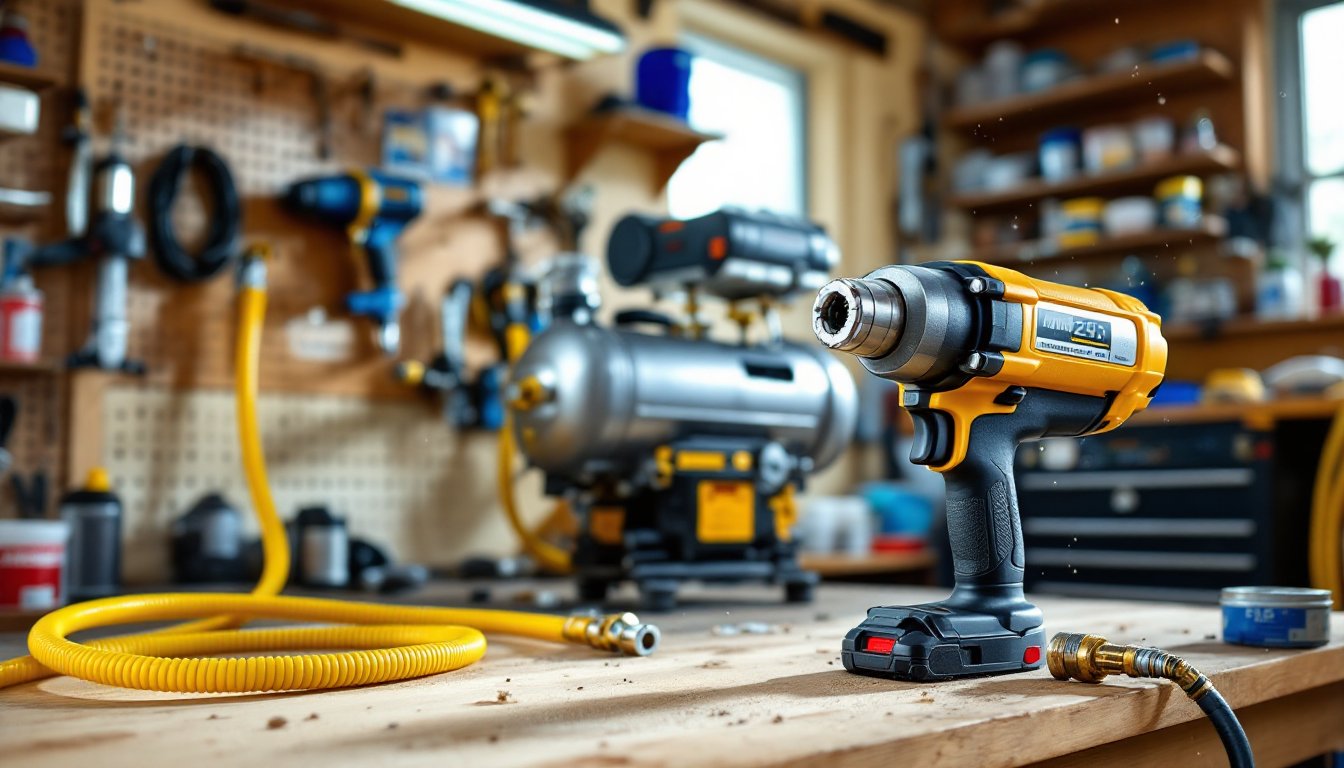
Air power tools operate on compressed air instead of batteries or motors, making them lighter and more affordable than most electric equivalents. A pneumatic impact wrench weighs about half what a cordless version does, yet delivers more sustained torque without battery drain. They run cooler because there’s no motor heating up, which means you can work longer without tool fatigue setting in.
The real advantage shows up in cost. A quality pneumatic drill or impact driver runs $40–$80, while a decent cordless model costs $150 and up. You pay once for a compressor, then add tools for a fraction of the price. Plus, pneumatic tools have fewer internal components, so repairs, if needed, are straightforward and cheap. They’re also ideal for continuous-duty work: a nail gun won’t quit mid-job, and an air ratchet delivers steady power hour after hour without throttling back like a battery would.
Essential Air Power Tools Every Homeowner Should Know About
Impact Wrenches and Drills
Pneumatic impact wrenches are workhorses for removing stubborn fasteners and driving large bolts. They deliver rotational force in quick bursts, breaking rust and corrosion without the arm strain of manual tools. A 3/8-inch drive impact wrench works for most homeowner tasks, brake maintenance, deck construction, or fence installation, while a 1/2-inch drive handles heavier automotive work. Impact wrenches typically run at 7,000–8,000 RPM and deliver 100+ ft-lbs of torque, making short work of tasks that’d otherwise require a breaker bar and swearing.
Air drills suit drilling through metal, plastic, and wood faster than cordless drills, especially when you’re doing multiple holes. They’re less common in home workshops than impact wrenches, but they’re invaluable for production-style work. Look for a 3/8-inch chuck for general use, which accepts bits up to 3/8-inch diameter.
Nail Guns and Fastening Tools
Finish nailers, brad nailers, and coil nailers are where pneumatic tools shine brightest for home projects. A coil nailer drives 16-gauge nails into framing, perfect for roof sheathing, fence boards, or rough carpentry. A finish nailer uses smaller 15-gauge nails for trim, crown molding, and cabinetry, leaving minimal visible holes. Brad nailers shoot 18-gauge nails for delicate work like door frames or thin trim where splitting wood is a risk.
Each has a dedicated nailing sequence and depth adjustment, so take time to dial in your specific gun before tackling your project. Using mechanical workshop tools alongside pneumatics gives you the versatility to handle nearly any fastening scenario. A quality coil nailer costs around $150–$250, while a finish nailer runs $80–$150. The investment pays for itself after two or three projects.
Selecting the Right Compressor for Your Workshop
Your compressor is the heart of your air tool system. It needs to supply enough air volume (measured in CFM, cubic feet per minute) and pressure (PSI, pounds per square inch) to keep your tools running without stalling.
Most homeowner nail guns need 2–3 CFM at 80–90 PSI, while impact wrenches demand 4–6 CFM at 90 PSI. A pancake compressor (5–8 gallon capacity, 2.0–3.5 CFM) works fine for occasional nailing or assembly work, but if you’re running multiple tools or working continuously, step up to a portable air compressor with at least 5.0 CFM and a 20-gallon tank.
Tank size matters because larger tanks store more air, reducing how often your compressor cycles on to refill. Frequent cycling generates heat and shortens compressor life. For a dedicated workshop, a stationary 60-gallon or larger tank is ideal, it handles peak demand from multiple tools and reduces motor runtime. Oil-lubricated compressors (also called two-stage units) are quieter and more durable for home workshops. Oilless models are lighter and more portable, but they’re noisier and don’t last as long under heavy use.
Calculate your CFM needs by adding up all tools you might run simultaneously, then buy a compressor rated for at least 150% of that number. Undersizing is the most common mistake: a struggling compressor that can’t keep up will stall your tools and frustrate you fast. Line size also matters, use at least 1/4-inch ID hose for runs longer than 25 feet to minimize pressure drop.
Getting Started: Tips for Using Air Tools Safely and Effectively
Before firing up any pneumatic tool, always wear safety glasses, fasteners can ricochet or splinter can fly. If you’re running a compressor indoors, wear ear protection: most workshop compressors exceed 80 dB. For finish work, consider a dust mask if you’re cutting or sanding alongside pneumatic fastening.
Drain your tank daily. Air contains moisture, and water pooling in the tank causes rust and contamination that damages seals in your tools. Most compressors have a simple petcock at the base, open it for 10 seconds while the unit is pressurized to release accumulated moisture. For longer storage, drain the tank completely and crack the petcock open to allow air circulation inside.
Use proper hose fittings (typically 1/4-inch NPT thread) and check connections before each use, a slow leak wastes energy and reduces available air pressure at your tool. Install an in-line regulator and water filter on your hose to control tool pressure and remove remaining moisture. This setup costs $30–$50 but doubles tool life by preventing corrosion inside cylinders and mechanisms.
When using a nail gun, keep the contact trip engaged, never bypass it with a modification, because releasing a fastener accidentally can cause serious injury. Load nails using the magazine properly: jamming a bent nail into the feeder often damages internal parts. After each project, disconnect your hose and bleed pressure from the compressor before storing tools. Store air tools in a dry space, away from temperature swings, to prevent condensation inside cylinders. Resources like step-by-step DIY tutorials and maker guides offer detailed visual walkthroughs if you’re unsure about any setup step. For specialized storage solutions, a drawer-slide storage system keeps your tools organized and accessible. Your approach to maintenance directly impacts how long your investment lasts and how reliably tools perform when you need them.
Conclusion
Air power tools deliver speed, reliability, and value that justify the upfront compressor investment. Start with essentials, a quality coil or finish nailer and an impact wrench, then expand as projects demand. Focus first on matching your compressor size to your tools’ CFM requirements and nailing down your routine maintenance. With honest setup and regular care, pneumatic tools become the backbone of an efficient home workshop that keeps pace with your ambitions.