If you’ve spent a Saturday morning wrestling with an underpowered lawn mower or a corded weed trimmer that never reaches the back corner of your yard, you know the frustration. DeWalt lawn tools deliver the kind of professional-grade performance and reliability that homeowners and DIY enthusiasts have come to expect from the brand’s power tool lineup. Built on the same battery platform that powers cordless drills and impact drivers, DeWalt’s outdoor equipment combines cutting-edge lithium-ion battery technology with rugged engineering, meaning less downtime, fewer cords snaking across your grass, and more time actually enjoying a well-maintained property.
Table of Contents
ToggleKey Takeaways
- DeWalt lawn tools combine professional-grade reliability with interchangeable lithium-ion battery technology, allowing you to power multiple outdoor equipment from a single charger and battery platform.
- The interchangeable battery ecosystem means existing DeWalt cordless drill and impact driver batteries work seamlessly with lawn mowers, trimmers, and blowers, significantly reducing equipment costs.
- DeWalt offers 3-year limited warranties and readily available replacement parts at major retailers, backed by decades of professional-tool engineering standards applied to residential yard equipment.
- Maximize runtime by starting with at least one 4.0Ah battery—which delivers roughly 30-40 minutes of cutting time on a 20V MAX lawn mower—and store batteries fully charged in cool, dry conditions (50-80°F) to preserve lithium-ion performance.
- Regular maintenance extends tool lifespan: clean motor vents after each use, sharpen or replace blades every 20-30 hours to prevent motor strain, and wipe battery connectors quarterly to ensure optimal power transfer.
- DeWalt’s cordless lawn tools lineup eliminates gas-engine hassles (no spark plugs, oil changes, or seasonal maintenance) while delivering quiet operation and instant starts for both small property upkeep and larger suburban landscaping tasks.
Why DeWalt Dominates the Lawn Care Market
DeWalt’s reputation in cordless lawn care doesn’t come from hype, it’s built on decades of dominance in the professional tool space. The brand’s transition to battery-powered outdoor equipment means the same rigorous standards that contractors rely on now extend to your shed.
One key reason is the interchangeable battery ecosystem. If you already own a DeWalt cordless drill or impact driver, you’re likely sitting on compatible batteries and chargers. That compatibility cuts equipment costs and means you’re not juggling different charging systems for different tools. A single charger powers your lawn mower, string trimmer, blower, and hedge trimmer.
Battery performance in outdoor work is non-negotiable. DeWalt uses 20V MAX and FLEXVOLT (60V) lithium-ion packs engineered to handle sustained runtime in hot conditions. Unlike older nickel-cadmium batteries, these hold a charge longer and tolerate temperature swings that typical summer yard work throws at them.
Durability matters on the lawn. DeWalt lawn tools feature reinforced plastic housings, sealed connectors, and bearings designed to shed grass clippings and moisture. You won’t find thin-walled designs here, these are built to outlast a season or two of weekend abuse.
Warranty and parts availability round out the value proposition. DeWalt offers 3-year limited warranties on most lawn tools, and replacement parts (blades, batteries, chargers) are stocked at major retailers nationwide, not buried in some online marketplace three weeks out.
Essential DeWalt Lawn Mowers and Cutting Equipment
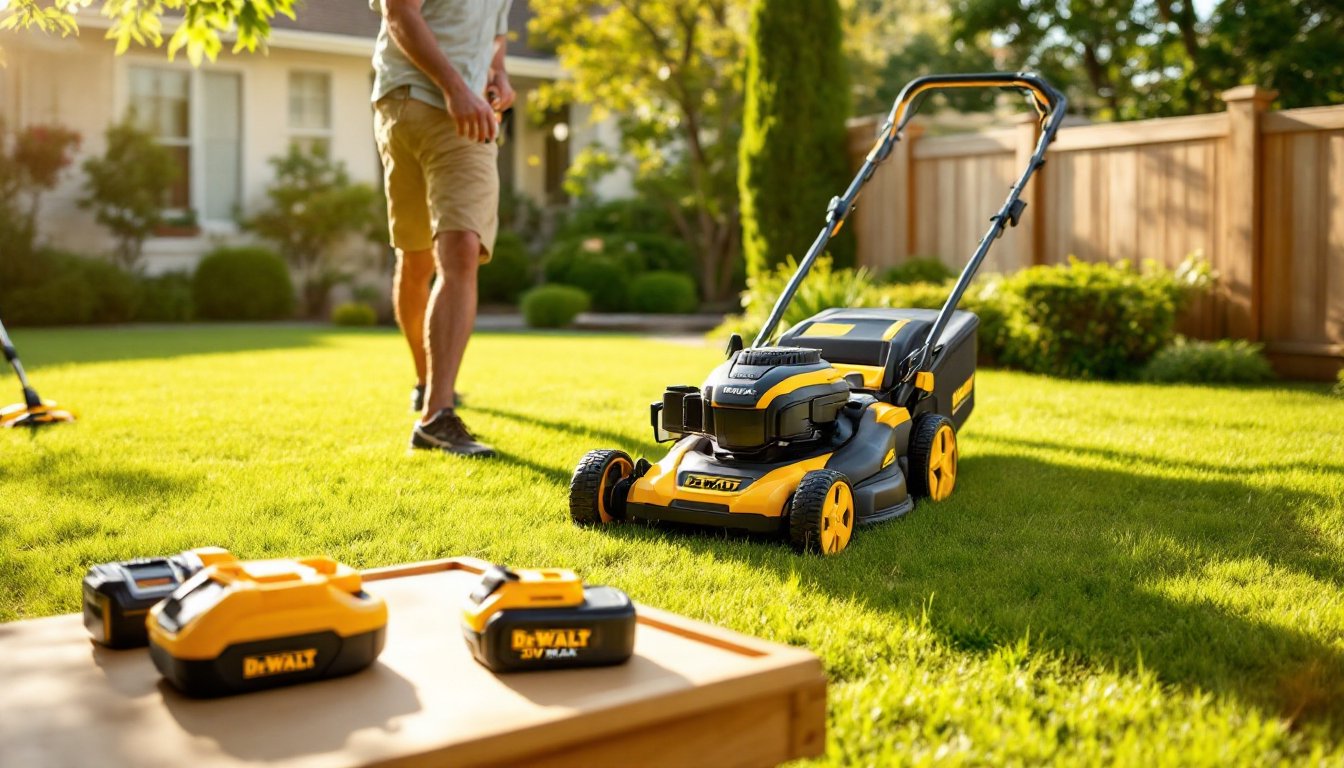
The DeWalt 20V MAX Cordless Lawn Mower (model DCMW220P2) is the bread-and-butter tool for most homeowners. It features a 20-inch cutting deck and three height-adjustment positions, letting you dial in anything from a short golf-course cut to a lawn left taller for summer heat stress tolerance. Two 20V batteries ship with the kit: swap one out when it drops, and you’re back in action without waiting for a full recharge.
For larger properties, the 60V FLEXVOLT Lawn Mower (model DCMW564P1) is the heavy hitter. The dual-motor design and 21-inch deck handle thick grass and uneven terrain that makes smaller mowers bogged down. Runtime stretches to around 60 minutes on a full charge, enough for most suburban lots without swapping batteries.
Cutting blades matter more than most DIYers realize. DeWalt includes high-carbon steel blades that stay sharp longer than budget aluminum alternatives. When they dull (typically after 5–8 hours of cutting), replacement blades cost $15–$25, not $50 for a proprietary system. Always wear eye protection and heavy pants when changing blades: even a “dead” mower can harbor a spinning blade if the battery isn’t fully disconnected.
Deck cleanliness extends mower life. After each session, tip the mower on its side (battery side up to prevent fuel seeping from the carburetor), scrape dried grass from underneath, and let it dry. Caked-on clippings trap moisture and invite rust. A plastic scraper or old paint stick works fine, skip the pressure washer, which forces water into the motor housing.
The 20V MAX String Trimmer (DCST920B) pairs nicely with the mower for edging and tough spots your lawn mower can’t reach. Single-line auto-feed, lightweight aluminum shaft, and a 0.065-inch cutting diameter give clean results on regular lawn grass and light brush. Cordless weed eater options have become mainstream: this DeWalt trimmer sits comfortably in the pro-sumer range, more durable than budget homeowner gear, less overkill than contractor equipment.
Maximizing Battery Performance Across Your DeWalt Fleet
Battery management is where cordless tools either shine or frustrate. DeWalt’s 20V MAX batteries come in 1.3Ah, 2.0Ah, and 4.0Ah capacities. The amp-hour (Ah) rating dictates runtime: a 4.0Ah battery delivers roughly twice the cutting time of a 2.0Ah pack before needing a recharge. Start with at least one 4.0Ah and a charger if you’re building a fleet.
Charging logistics: the standard DCD771C2 charger takes 30–60 minutes per battery, depending on capacity. For larger yards or back-to-back projects, a dual-port fast charger cuts that time in half. Yes, it costs more upfront, but the time savings add up fast when you’re juggling weekend projects.
Battery storage matters year-round. Store fully charged batteries in a cool, dry location (50–80°F is ideal) rather than a hot garage or damp shed. A discharged battery sitting in a freezing shed loses charge faster. Before winter shutdown, charge your batteries fully and stash them indoors. Lithium-ion packs degrade in extreme cold.
Safety first: never use a damaged battery, and don’t leave a battery on a charger indefinitely. DeWalt chargers include automatic shut-off, but leaving a charged battery in direct sunlight for weeks invites failure. Treat them like you’d treat a car battery, charge, use, store safely.
Runtime expectations vary. A 4.0Ah battery on the 20V MAX mower yields roughly 30–40 minutes of cutting on typical lawn grass. Tall, dense grass or damp conditions shorten that: warm, dry conditions extend it. Knowing your yard’s size helps you plan battery swaps before you’re stranded halfway through mowing.
Landscaping and Trimming Tools to Complete Your Setup
Once your lawn is cut and edged, a cordless leaf blower finishes the job. DeWalt’s 20V MAX blower (model DCBL720P1) delivers enough force for driveways and patios without sounding like a jet engine at 6 a.m. Runtime tops out around 20 minutes, which covers most residential cleanup work. The lightweight design won’t tire your arms on a longer session compared to gas-powered alternatives.
Hedge trimmers round out landscaping tasks. The 20V MAX hedge trimmer (DCHT820P1) features a dual-action cutting head and a 22-inch blade length, perfect for shrub maintenance and small branch pruning. Always wear cut-resistant gloves and long sleeves: spinning blades don’t distinguish between brush and skin. Keep both hands on the tool and never reach into the cutting head while it’s running.
For tougher vegetation, a chainsaw exists in DeWalt’s cordless lineup, though these are more for occasional limb trimming than regular cord-wood cutting. The 20V MAX and 60V FLEXVOLT versions handle dead branches and small felled trees. A cordless chain-saw doesn’t match a gas engine’s torque for heavy debris, but for homeowner tasks, clearing storm damage, pruning overgrown branches, it’s quieter, maintains better, and starts instantly.
These tools integrate seamlessly because they share the same battery platform. Snap a 4.0Ah pack into the blower, swap it to the trimmer when the blower’s done, then move it to the hedge trimmer. One charger, one battery system, zero learning curve if you’ve already used DeWalt cordless tools for indoor projects.
Toolmakers like DeWalt, Makita, and others have standardized on lithium-ion systems: home improvement guides cover the broader landscape of outdoor tool options, but the cordless trend is now industry standard. That means resale and rental demand for cordless equipment has stabilized, a solid sign of long-term viability for your investment.
Maintenance Tips to Extend Tool Lifespan
Cordless tools demand less maintenance than gas-powered equipment, no spark plugs, oil changes, or seasonal stabilizer flushing, but they’re not maintenance-free. Cleanliness is your first defense.
After each use, brush grass and debris from the motor vents and cooling slots. Clogged vents trap heat and can shorten motor life. A soft brush or old toothbrush works: compressed air is even better if you have it. Never use a pressure washer on the motor or battery contacts, water and electricity don’t mix.
Blade sharpness affects both cutting quality and motor strain. A dull blade makes the motor work harder, draining batteries faster and potentially causing motor overheating. Sharpen or replace mower blades every 20–30 hours of use, or whenever you notice tearing (as opposed to clean cuts) on grass tips. A metal file, a dedicated blade sharpener, or a trip to a local tool-sharpening service ($5–$15 per blade) keeps everything efficient.
Battery terminals deserve attention too. Corrosion or loose connections reduce power transfer. Wipe battery connectors with a dry cloth quarterly, and ensure they slide firmly into the tool. A loose battery cuts runtime and triggers the tool’s safety cutoff.
Store tools in a clean, dry place out of direct sunlight. UV exposure breaks down plastic housings over time. A garage wall with a pegboard or magnetic strip keeps cordless tools accessible and protected. Hang batteries vertically or flat, never folded.
For seasonal shutdown (winter or extended storage), fully charge batteries before storing, then check every 2–3 months to maintain charge. Disconnect batteries from chargers once fully charged to prevent trickle-drain. A well-maintained tool set is only as good as its upkeep: consistent maintenance transforms a 5-year tool into a 10-year workhorse.
Manufacturer resources and brand-specific documentation provide model-specific maintenance schedules. Check your manual for exact guidance on your DeWalt models.
Conclusion
DeWalt lawn tools bring professional reliability and smart battery integration to residential yard work. Whether you’re mowing a quarter-acre or maintaining a showcase landscape, the combination of cutting-edge lithium-ion technology, durable construction, and a growing product ecosystem makes the brand a solid long-term investment. Proper battery management and seasonal maintenance keep these tools running strong for years, transforming weekend yard work from a chore into something you can actually accomplish on your schedule, not the tool’s.