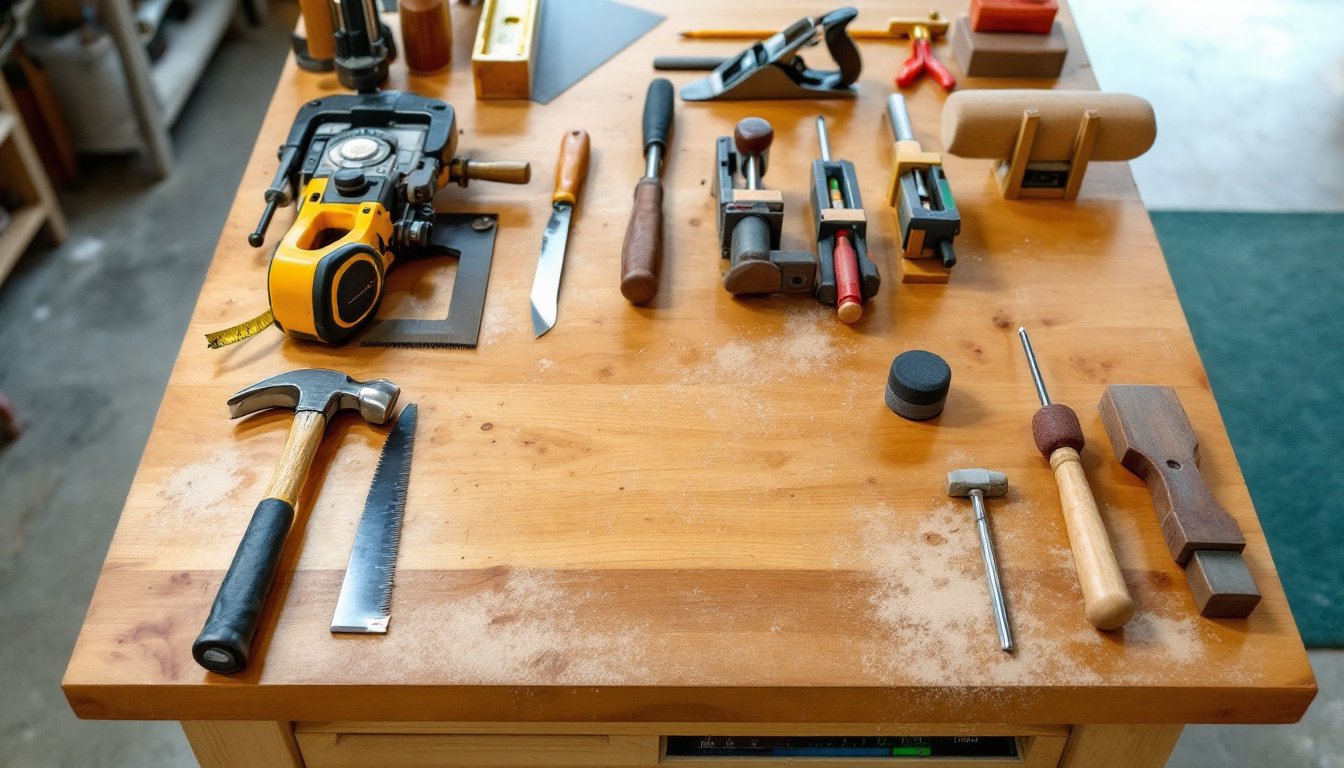
Most DIY projects fail not because homeowners lack ambition, but because they lack the right tools. You don’t need a garage full of equipment to build confidence and tackle everything from hanging shelves to assembling furniture. A solid foundation of hand tools, measuring, cutting, fastening, and finishing implements, turns frustration into progress. This guide covers the core carpentry hand tools that actually earn their spot in your workshop, organized by function so you can build your collection strategically rather than impulse-buying gadgets that gather dust.
Table of Contents
ToggleKey Takeaways
- A solid foundation of carpentry hand tools organized by function—measuring, cutting, fastening, and finishing—transforms DIY frustration into progress without requiring a garage full of equipment.
- Measuring and marking tools like tape measures (25-foot models), speed squares, and levels are non-negotiable: accurate measurements prevent costly mistakes and ensure tight joints.
- Japanese pull saws and coping saws provide precision and control superior to power tools for finish work, trim, and intricate cuts where safety and accuracy matter most.
- Essential fastening tools include a 16-ounce claw hammer, quality screwdrivers with interchangeable bits, and nail sets, which handle 80% of home projects without the cost or complexity of power tools.
- Chisels, rasps, block planes, and hand-sanding with progressive grits demonstrate craftsmanship where finishing work separates amateur results from professional-quality carpentry.
- Clamps and holding devices—including bar clamps, C-clamps, and bench vises—are indispensable for safe, two-handed work; building a clamp collection prevents the frustration of fighting materials single-handedly.
The Core Foundation: Measuring and Marking Tools
Measuring twice, cutting once isn’t just a saying, it’s the difference between a tight joint and kindling. Without accurate measurements and clear marks, even the finest cutting tools can’t save you.
Tape measures come in 16′, 25′, and longer lengths: for home projects, a 25-foot model with a 1-inch blade width handles most tasks. Look for one with a standout of at least 10 feet, the distance the blade extends before collapsing, so you can measure alone without the tape folding over.
Speed squares (also called rafter squares) are L-shaped aluminum tools marked with degree angles and notches. They guide straight cuts on lumber, help you mark miter angles, and work as a saw guide. Every carpenter reaches for these constantly.
Levels come in 24″ to 48″ lengths and detect whether surfaces are plumb (vertical) or level (horizontal). A 2-foot model works for most home repairs and fits in tight spaces. Don’t cheap out here, a warped level creates crooked shelves and wonky door frames.
Pencils designed for marking (flat carpenter’s pencils) won’t roll off angled lumber like round pencils do. Some carpenters prefer mechanical pencils for finer marks. Keep them sharp: dull marks lead to sloppy cuts.
Chalk lines snap long, straight reference lines on walls, floors, or sheet goods, essential for aligning multiple pieces. They’re inexpensive and indispensable for framing work and laying out flooring.
Cutting Tools for Precision and Control
A quality handsaw cuts more safely and accurately than an underpowered circular saw in inexperienced hands. Hand saws also require no electricity, no hearing protection, and no extension cords draped across your work area.
Japanese pull saws (like the Silky Gomboy or equivalent) cut faster and cleaner than Western saws because the blade is thinner and the cutting action works on the pull stroke. They’re fantastic for crosscutting lumber and trimming joinery, areas where precision matters. Many carpenters prefer them to circular saws for finish work.
Coping saws have a thin, U-shaped blade perfect for intricate cuts in trim, curves, and notches. If you’re fitting baseboard around irregular walls or cutting decorative profiles, a coping saw is your partner. Blades are cheap and snap-in replacements take five seconds.
Utility knives with retractable blades aren’t just for opening packages. Carpenters use them for scribing, marking, and light trimming on drywall, shims, and blocking. Always keep spare blades on hand.
Hand planes (a #4 or #5 bench plane) remove material more controlably than sanders for chamfering edges, flattening panels, or fitting door frames. They’re less common in modern DIY shops, but if you inherit trim work or furniture repair, a plane saves hours versus hand-sanding. As professional woodworkers note, planes require sharpening and technique, invest time in learning proper setup.
For heavier work like cutting studs or sheet goods, a circular saw or miter saw earns its place, but hand saws keep you in control on finished surfaces.
Fastening and Assembly Tools You’ll Use Constantly
Hammers and Mallets
A 16-ounce claw hammer is the workhorse. The claw pulls nails: the flat face drives them. Look for a model with a slightly curved claw (better leverage for pulling) and a rubberized handle to reduce shock to your wrist. Heavier hammers (20 oz) drive framing nails faster but tire your arm: lighter ones (13 oz) suit trim work. An all-around 16-ounce hammer handles 80% of home projects.
Rubber mallets strike chisels, tap boards into place, and assemble furniture without marring wood. A 1.5 to 2-pound mallet is suitable for most tasks. Unlike metal hammers, they won’t dent finished wood when you’re fitting a door frame or aligning deck boards.
Nail sets (also called nails) are small, tapered tools that drive nail heads below the surface, leaving a small divot you fill with wood filler or putty. Use them on trim and cabinetry to hide fasteners. A set with two or three different tip sizes covers most nail diameters.
Screwdrivers and Screw Guns
Phillips head and flathead screwdrivers come in various sizes. Buy a multi-bit handle or compact set with interchangeable bits rather than a dozen individual drivers. A stubby screwdriver fits confined spaces: a longer handle gives leverage on stuck fasteners. Avoid the dollar-store sets, soft metal tips strip screws instantly.
Square-drive bits (Robertson) work great if your fasteners have that slot pattern. Square drives bite better than Phillips heads and rarely strip. Check what fasteners your project uses before buying bulk screwdrivers.
Power drill-drivers blur the line between hand tools and power tools, but many DIYers start with hand-driven alternatives. A quality manual screwdriver costs $5–$15 and works forever. You can always upgrade to cordless later. For heavy fastening (100+ screws), a power drill saves time and wrist strain, but master hand-driving first to understand when to apply pressure and when to back off.
Shaping and Finishing Tools
Once structural work is done, shaping and finishing tools refine edges, round corners, and smooth surfaces. These tasks take patience, but they’re where craftsmanship shows.
Chisels (1/4″, 1/2″, 3/4″, 1″) cut mortises, notches, and clean up saw kerfs. A bevel-edge chisel works better than a socket chisel for most home tasks, lighter, easier to control, and less expensive. Keep them sharp. A dull chisel bounces and slips, crushing wood instead of slicing it. One or two quality chisels beat a set of dull ones.
Block planes smooth edges and chamfer corners without a full bench plane. A low-angle block plane (around 5 pounds) works great on end grain where regular planes can splinter. Woodworkers on Instructables often recommend block planes for furniture assembly and edge finishing.
Rasps and files shape curves and remove material faster than chisels. A half-round rasp handles both convex and concave surfaces. Files have smaller teeth for finer finishing. Start with one decent rasp rather than a full set of specialty files.
Sandpaper and sanding blocks come in grits from 60 (rough) to 220 (fine). Use progressively finer grits, 80, 120, 180, to avoid visible scratches. A wood or cork sanding block prevents rounding edges that a loose sheet won’t. Hand-sanding takes longer than orbital sanders but gives you control over final finishes, especially on stained or painted surfaces where over-sanding creates dull spots.
Scrapers remove paint, glue, or rough spots without splintering surrounding wood. A pull scraper feels more natural than push types to most people. They require sharpening but cost a few dollars and last decades.
Clamps and Holding Devices
Clamps hold work steady while you cut, glue, or fasten, freeing both your hands and your sanity. “No clamps” is a myth: “not enough clamps” is universal.
C-clamps (2″, 4″, 6″) apply pressure perpendicular to your work. They’re cheap, durable, and indispensable. Start with one 4-inch model: you’ll quickly want more.
Bar clamps (24″ to 36″) hold long boards flat during glue-ups or straighten bowed lumber. A pair of 24-inch bar clamps handles most home jobs. Parallel-jaw bar clamps maintain even pressure across the jaw length, worth the extra cost if you’ll glue panels frequently.
Vises mounted to a workbench or bench dog holes clamp work vertically. If you’re doing sustained hand-planing or chiseling, a vise beats hand-clamps. For homeowners without a dedicated workshop, a portable bench vise ($30–$60) clamps to a table.
Handscrews (wooden clamps with two parallel jaws) protect delicate finishes because wood-to-wood contact won’t dent your project. They’re slower than metal clamps but excel on finished furniture and painted surfaces. Common sizes run 10″ to 14″.
Spring clamps and C-clamps are quick for light hold-ups, but don’t substitute them for real clamping pressure. A Basic Home Tool Kit should include at least two bar clamps and one bench vise if woodworking is part of your future. Building a collection of holding devices seems extravagant until you’re fighting a board with one hand and trying to cut with the other. You’ll understand then.