Most DIY projects don’t fail because of bad planning, they fail because someone grabbed whatever was on the shelf instead of reaching for the right tool. Common hand tools are the foundation of every successful home improvement project, from hanging a picture frame to building a deck. Whether you’re a complete beginner or someone who’s tackled a few projects, understanding which hand tools truly matter and how to use them properly changes everything. The good news? You don’t need a garage the size of a warehouse or a budget that breaks the bank. This guide walks you through the essential hand tools every homeowner and DIY enthusiast should have, why they matter, and how to build a kit that actually works.
Table of Contents
ToggleKey Takeaways
- Quality hand tools—like a 16-ounce claw hammer, multi-bit screwdriver, and 25-foot tape measure—form the foundation of successful DIY projects without requiring a large investment.
- Choosing the right hand tool for each task (fastening, measuring, cutting, and gripping) prevents project failures more effectively than having a large collection of cheap tools.
- Common hand tools provide precision control and safety for beginners because they rely on human power rather than electricity or batteries, making them ideal for delicate work.
- Proper measurement and marking are critical first steps: investing in a quality tape measure, level, and speed square prevents cascading errors that skill alone cannot fix later.
- Start with eight essential hand tools and expand deliberately based on actual project needs rather than buying a complete set you’ll rarely use.
- Maintaining hand tools through regular cleaning, keeping blades sharp, and replacing worn parts extends their lifespan for decades and ensures reliable performance.
Understanding Your Hand Tool Basics
Before diving into specific tools, it helps to understand what separates a hand tool from everything else in your workshop. Hand tools rely on human power, no electricity, no batteries, no compressor needed. This makes them quieter, safer for beginners, and perfect for precision work where control matters more than speed.
The key to building a practical hand tool collection is focusing on quality over quantity. A single well-made hammer beats ten cheap ones that either break or drive nails at weird angles. When you’re investing in tools that’ll last decades, spending a bit more upfront on something from a reputable manufacturer pays off. Look for tools with comfortable grips, balanced weight distribution, and solid construction, signs that the maker actually tested them with real hands doing real work.
Sturdy hand tools form the backbone of any reliable workshop, and understanding how they function helps you choose wisely. Most DIY work falls into a few categories: fastening (driving nails and screws), measuring and marking, cutting, gripping, and striking. Master these basics, and you’re ready to tackle almost any household project.
Hammers and Striking Tools
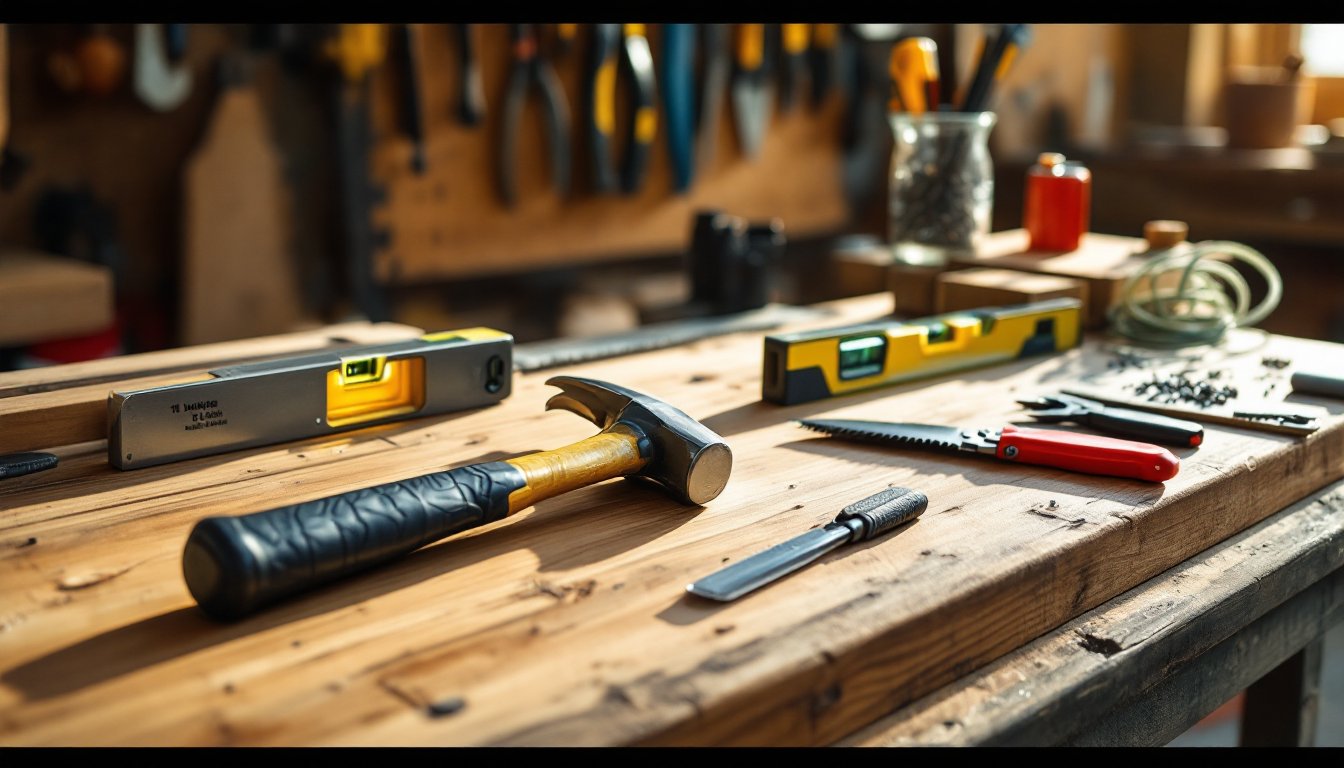
The hammer is where most people start, and for good reason. A 16-ounce claw hammer with a fiberglass or steel shaft handles 95% of residential fastening work. The weight provides enough momentum to drive a nail without requiring excessive arm strength, while the claw pulls nails out cleanly when you need corrections, and you will need them.
Pick one with a comfortable handle that doesn’t slip when your hands are sweaty or dusty. Rubberized grips absorb shock and reduce hand fatigue on longer projects. The head should be balanced, meaning it swings true without twisting your wrist. Test it in your hand before buying if possible, tools are intensely personal, and what feels great to a 200-pound contractor might exhaust a smaller homeowner.
Beyond the claw hammer, consider a rubber mallet for work where you need force without marring the surface, think tapping trim into place or adjusting flooring. A ball-peen hammer becomes useful if you ever work with metal chisels or cold chisels. Keep these specialized strikers in your kit but prioritize the claw hammer first. According to Popular Mechanics’ history of tools, the hammer ranks among humanity’s most important inventions, and for good reason, it’s been solving problems for millennia.
Screwdrivers and Fastening Essentials
Screwdrivers seem simple until you’re halfway through a project and realize you don’t have the right tip for the job. Start with a quality multi-bit screwdriver that holds several interchangeable bits, Phillips (#1 and #2 sizes), standard slotted, and a couple of square-drive (Robertson) bits. This single tool handles 90% of household fastening without needing a full set taking up drawer space.
The handle matters more than people realize. Look for one with a cushioned grip and a rotating cap at the top: the cap lets you apply downward pressure while turning, which prevents stripping screws and saves your wrist. An offset screwdriver (with a right-angle shaft) reaches into tight corners and confined spaces where a straight driver won’t fit.
If you’re drilling and driving frequently, add a power drill-driver, but keep a manual driver in your kit anyway. Hand-driving gives you control that power tools often lack, especially in delicate work or when fastening hardware to expensive finished surfaces. Essential workshop tools like quality screwdrivers prevent frustration and stripped fasteners that ruin projects.
Measuring and Marking Tools
“Measure twice, cut once” is a cliché because it’s true. Bad measurements cause cascading problems that no amount of skill fixes later. Start with a 25-foot tape measure with a 1-inch blade, wide enough to stay straight when extended, long enough for room-sized projects. The lock button should click firmly without sticking, and the hook at the end should slide smoothly to account for the thickness of the material you’re measuring against.
Add a torpedo level (2 feet long) for checking if surfaces are truly level or plumb, critical for shelving, tile, and any structural work. A speed square (adjustable right-angle guide) handles layout work, marking 45-degree cuts, and checking square edges. These three tools solve nearly all common measuring and alignment tasks.
For marking, keep a sharp pencil (sounds obvious, but dull pencils lead to imprecise cuts), a chalk line for snapping long straight lines, and a carpenter’s pencil that won’t roll off sloped surfaces. Mark from the top or back side of materials when possible to hide pencil marks in the final product. Basic tool set recommendations always prioritize measuring tools because mistakes here multiply through every other step.
Cutting and Sawing Equipment
Saws come in surprising variety, and each handles different materials and cuts with different levels of control. A handsaw (20-26 inches long, around 10-12 teeth per inch) cuts wood cleanly and requires no power. Use a steady, relaxed stroke, forcing the saw wears you out and produces rougher cuts. The saw should do the work: you just guide it.
For finer work, a coping saw or keyhole saw cuts curves and handles intricate shapes that a regular handsaw can’t. A hacksaw cuts metal, pipes, bolts, brackets, and is essential if you do any plumbing or work with steel fittings. A utility knife with snap-off blades scores drywall, cuts carpet, trims shingles, and handles a hundred other quick cuts. Keep blades sharp: a dull blade forces you to apply dangerous pressure.
Chisel and saw work requires eye protection, wear safety glasses whenever you’re cutting, sawing, or striking tools. Splinters, flying debris, and the occasional slip happen to everyone, and protecting your eyes takes seconds. According to resources like This Old House, proper hand-saw technique and maintenance separate confident DIYers from frustrated beginners struggling with dull, sticky blades.
Pliers and Gripping Tools
Pliers grip, bend, cut, and adjust in ways no other tool family does. Start with slip-joint pliers (standard adjustable pliers, 8-10 inches), the most versatile for general work. They grip wires, pipes, and fasteners from small to medium sizes. A tongue-and-groove plier (sometimes called Arc-joint or Channellock pliers) adjusts to grip objects of varying sizes and applies tremendous leverage, essential for stubborn fasteners and pipe work.
Add a locking plier (Vise-Grip style) that clamps and holds objects firmly while your hands stay free, invaluable for bending, cutting, or turning. Diagonal cutting pliers (lineman’s pliers) cut wire cleanly and strip insulation from electrical cable. A pipe wrench grips round objects like pipes and fittings where smooth pliers would slip.
Wear work gloves rated for the task, leather for handling rough materials, nitrile for wet work or chemicals. Sharp edges on cut wire or pipes demand protection. Test pliers in hand for comfort and smooth action before buying. Basic home tool kit guides consistently include quality pliers because they solve problems across virtually every project category, from electrical to plumbing to general fastening.
Building Your Complete Hand Tool Kit for Success
A practical starter kit doesn’t require spending hundreds. Prioritize these essentials first: a 16-ounce claw hammer, a multi-bit screwdriver, a 25-foot tape measure, a torpedo level, a speed square, a handsaw, a pair of slip-joint pliers, and a utility knife. That’s eight tools covering fastening, measuring, cutting, and gripping, the foundation.
As you tackle more projects, add specialized tools based on what you actually encounter. Working with pipes? Add a pipe wrench and hacksaw. Doing fine woodwork? Invest in quality chisels and a better saw. Hanging pictures constantly? A stud finder saves frustration. The key is starting simple and expanding deliberately rather than buying a 100-piece set where you’ll use 12 tools and store the rest.
Store tools where they’re accessible but organized, a wall-mounted pegboard, a rolling cart, or labeled drawers. Dull or damaged tools create hazards and frustration: maintain them by cleaning after use, keeping blades sharp, and replacing worn handles or grips. Best tool set for home advice emphasizes starting lean and growing smart. Quality hand tools last decades when cared for, making them one of the best investments a homeowner makes. Focus on building slowly with quality over chasing completeness with cheap tools that disappoint.