If you’ve spent time in a home improvement warehouse lately, you’ve probably noticed Atlas power tools alongside the big-name brands. Maybe you’ve wondered whether they’re worth the shelf space in your workshop. The honest answer: for most homeowners and serious hobbyists, they’re a solid choice. Atlas tools deliver the performance you need without asking you to take a second mortgage on your circular saw. Whether you’re framing a deck, hanging drywall, or tackling cabinet work, understanding what Atlas offers, and where they fit in your toolkit, saves money and frustration down the line.
Table of Contents
ToggleKey Takeaways
- Atlas power tools offer a reliable, mid-range option for homeowners and DIYers, delivering solid performance at 20–40% lower costs than premium brands like DeWalt or Makita.
- Brushless motor technology in Atlas cordless models reduces maintenance and extends runtime, while reinforced casings and three-year warranties ensure durability for regular workshop use.
- Essential Atlas tools for most home projects include a 20V cordless drill-driver, impact driver, circular saw, and multi-tool—covering framing, fastening, cutting, and finishing tasks.
- Investing in extra batteries (4.0 Ah) and a dual charger upfront maximizes productivity and prevents runtime interruptions during demanding projects.
- Regular maintenance—cleaning chucks, storing batteries properly, inspecting cords, and replacing dull blades—keeps Atlas power tools performing reliably for years without major repairs.
What Are Atlas Power Tools and Why They Matter for Your Workshop
Atlas power tools are mid-range equipment designed for homeowners, contractors, and workshop enthusiasts who want reliability without premium pricing. They’re manufactured to handle standard residential and light commercial tasks, think drywall cutting, wood drilling, fastening, and finishing work. Unlike budget-bin brands that feel like they’ll shake apart after three uses, Atlas tools come with decent warranties and consistent quality control. They’re not professional-grade Makita or DeWalt equipment, but they’re not disposable either. The appeal is straightforward: you get functional tools that won’t leave you broke or disappointed halfway through a project. Most DIYers find Atlas tools strike the right balance between upfront cost and longevity, especially when tackling seasonal projects or building out a first-time workshop.
Key Features That Set Atlas Tools Apart from Competitors
Durability and Build Quality
Atlas tools use brushless motors in many of their cordless models, which means fewer maintenance headaches and longer runtime between charges. Brushless technology reduces wear on internal components, so your drill or impact driver stays reliable season after season. The gear casings and chucks are built from reinforced plastic and metal compounds that resist drops and impacts, something that matters when tools spend time bouncing around in truck beds or garage shelves. Most Atlas models include three-year warranties, which tells you the manufacturer stands behind the build. You’ll notice solid weight distribution and ergonomic handles that reduce fatigue during longer work sessions. Real-world feedback from users on Family Handyman forums shows that Atlas tools hold up to repeated use without mechanical failure, which is the baseline test for any power tool.
Affordability and Value for Money
Atlas tools typically cost 20–40% less than comparable models from premium brands, without cutting corners on essential features. A 2-speed cordless drill-driver from Atlas runs around $60–90, versus $150+ for similar DeWalt or Makita equivalents. That price gap lets you buy multiple tools or invest in batteries and chargers instead of stretching your budget thin. The value proposition works especially well if you’re building out a workshop from scratch, buying a full basic set (drill, impact driver, saw, sander) from Atlas is more achievable than maxing out a credit card on premium brands. Resale value drops faster than name brands, but for homeowners who keep tools long-term, that’s less relevant than initial cost and performance.
Popular Atlas Power Tool Models for Home Projects
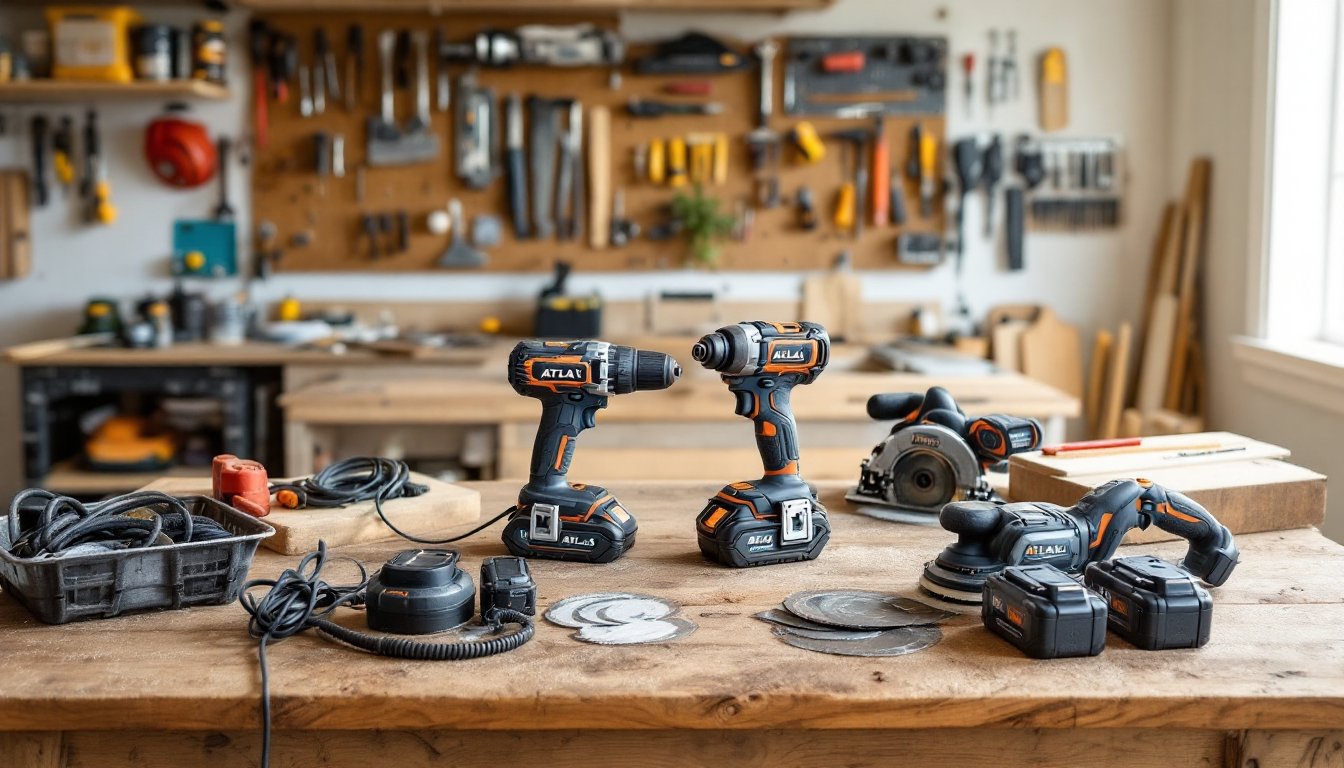
The Atlas 20V cordless drill-driver is the workhorse model. It handles standard fastening, light drilling into wood and plastic, and driving screws all day without bogging down. Compact enough for overhead work (cabinet installation, soffit fastening) but powerful enough for deck building. The impact driver in the same 20V lineup adds serious torque for lag bolts, structural screws, and fasteners in dense materials, a must-have if you’re doing heavy framing or fence work. For cutting, the 6.5-inch circular saw and miter saw models are popular choices among DIYers tackling trim, sheathing, and finish work. They’re lighter than full-size contractor saws but deliver clean, accurate cuts when properly adjusted. The oscillating multi-tool rounds out a basic kit for tasks like cutting drywall around outlets, sanding trim edges, and removing old grout. Real workshops often pair Atlas saws with a cordless reciprocating saw for demolition and rough cutting, especially useful when removing old framing, drywall, or roofing. Resources like Popular Mechanics regularly test tool performance in field conditions, and Atlas models consistently score well for value even though their price point.
How to Choose the Right Atlas Tool for Your Specific Needs
Start by identifying your primary project type. Are you hanging shelves and art? Stick to a basic drill-driver. Building a deck or pergola? Add an impact driver and circular saw to handle structural fasteners and lumber cuts. Renovating a bathroom or kitchen? Throw in a multi-tool and oscillating sander. Think about your workspace too, if you’re in an apartment with noise concerns, a corded impact driver beats a nail gun. Budget matters, but so does runtime. A single 2.0 Ah battery runs out fast during high-demand tasks: consider grabbing an extra 4.0 Ah battery and a dual charger upfront. That investment keeps you working while one battery charges. If you’re doing mostly light repair work a few times a year, a basic drill-driver and compact circular saw kit covers 80% of homeowner needs. For serious renovation projects, Essential Workshop Tools that include multiple saws, drivers, and specialty bits save time and frustration. Check YouTube reviews of the specific model before buying: real users show you runtime, noise level, and durability better than spec sheets.
Maintenance Tips to Extend Your Atlas Tools’ Lifespan
Keep chucks and bit holders clean and dry. Sawdust buildup forces the chuck to work harder and can damage the gripping mechanism. Blow out your drill or driver with compressed air after dusty jobs, especially drywall work, where fine powder infiltrates seals. Store batteries in a cool, dry place: heat degrades lithium-ion cells, so avoid leaving them in hot trucks or direct sun. Check your charger regularly for corrosion or damage: a bad charger kills batteries faster than normal use. If a battery won’t hold charge after a full cycle, it’s reached end of life, don’t try reviving it in a freezer or with creative charging tricks. Inspect cables and cords before plugging in corded models: cuts or exposed wire mean that tool is done until repaired. Saw blades get dull: replace them when they pull instead of cutting cleanly. A dull blade stresses the motor and creates unsafe kickback risk. Brushless motors need less upkeep than brushed versions, but don’t assume zero maintenance, air filters on sanders and saws still need cleaning. Building a Tool Sets routine (monthly inspection, quarterly deep cleaning) keeps your Atlas equipment working hard for years. For detailed construction guidance on complex builds, Fine Homebuilding offers technical articles that pair well with proper tool maintenance practices.