Building something meaningful with your own hands beats hiring a contractor every time, if you’ve got the right tools. Whether you’re framing a deck, hanging cabinets, or tackling a kitchen remodel, power tools separate weekend warriors from frustrated DIYers stuck with hand tools and a pile of regret. The tools you choose directly affect your project timeline, cut quality, and safety. This guide walks you through the essential carpentry power tools every homeowner should understand and operate confidently. You don’t need to own everything at once, but knowing which tools matter and why helps you build smarter, faster, and safer.
Table of Contents
ToggleKey Takeaways
- Cordless drills and impact drivers are gateway carpentry power tools every DIYer should master—look for 18-20V lithium-ion models with two batteries to maximize runtime on projects.
- Circular saws excel at ripping and on-site work, while miter saws deliver precise crosscuts and trim work; most homeowners benefit from owning both tools.
- Safety gear is non-negotiable: wear eye protection, hearing protection (power tools exceed 85-100 dB), and appropriate dust masks to prevent long-term respiratory damage.
- Orbital sanders save finishing hours and should be paired with detail sanders for tight corners and edges you can’t reach with standard equipment.
- Nail guns and brad nailers dramatically speed up trim and cabinetry work—both pneumatic and cordless options work well, but prioritize safety by keeping fingers out of the firing line.
- Start your carpentry power tool collection with a cordless drill and miter saw (covering 60% of typical projects), then add specialized tools as projects demand them rather than buying speculatively.
Essential Cordless Drills and Impact Drivers
A cordless drill is the gateway power tool for most DIY projects. It drives screws, drills holes, and serves double duty on countless tasks. Look for an 18-20V lithium-ion model with a 1/2″ chuck and two batteries so one charges while you work. Battery life matters more than raw power for most homeowners: a decent drill-driver runs about 2-3 hours per charge.
An impact driver looks similar but delivers rotational force differently, short, powerful bursts rather than smooth rotation. It excels at driving large fasteners, lag bolts, and lag screws into dense hardwood without the binding that kills regular drills. Many crews consider an impact driver essential for framing and deck work. The difference? An impact driver can drive a 3-inch deck screw into pressure-treated lumber one-handed: a regular drill might stall or twist your wrist.
Drill speed and torque vary widely. Most 18V models deliver 300-500 in-lbs of torque, plenty for typical projects. If you’re hanging drywall or assembly work, a faster 2,000 RPM helps. For heavy fastening, an impact driver at 1,200-1,500 RPM with 1,500+ in-lbs of torque outperforms a standard drill.
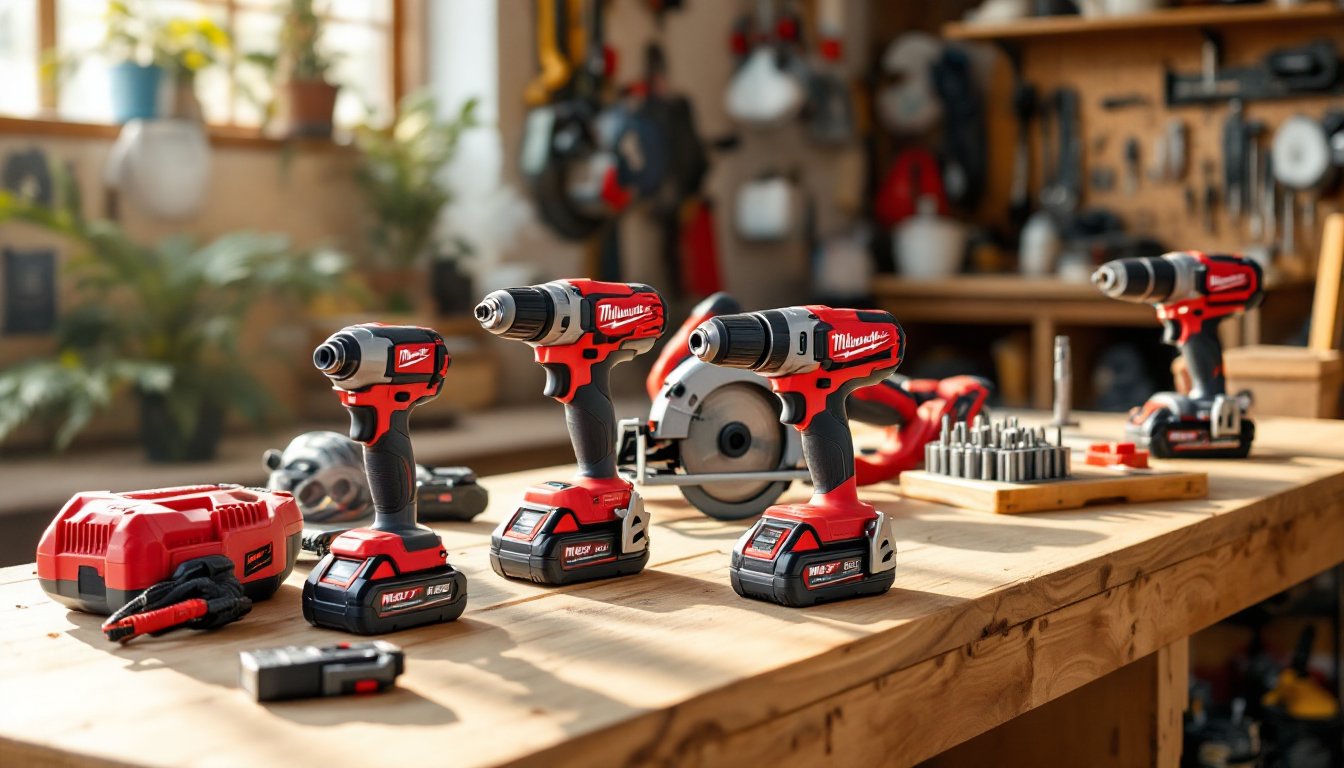
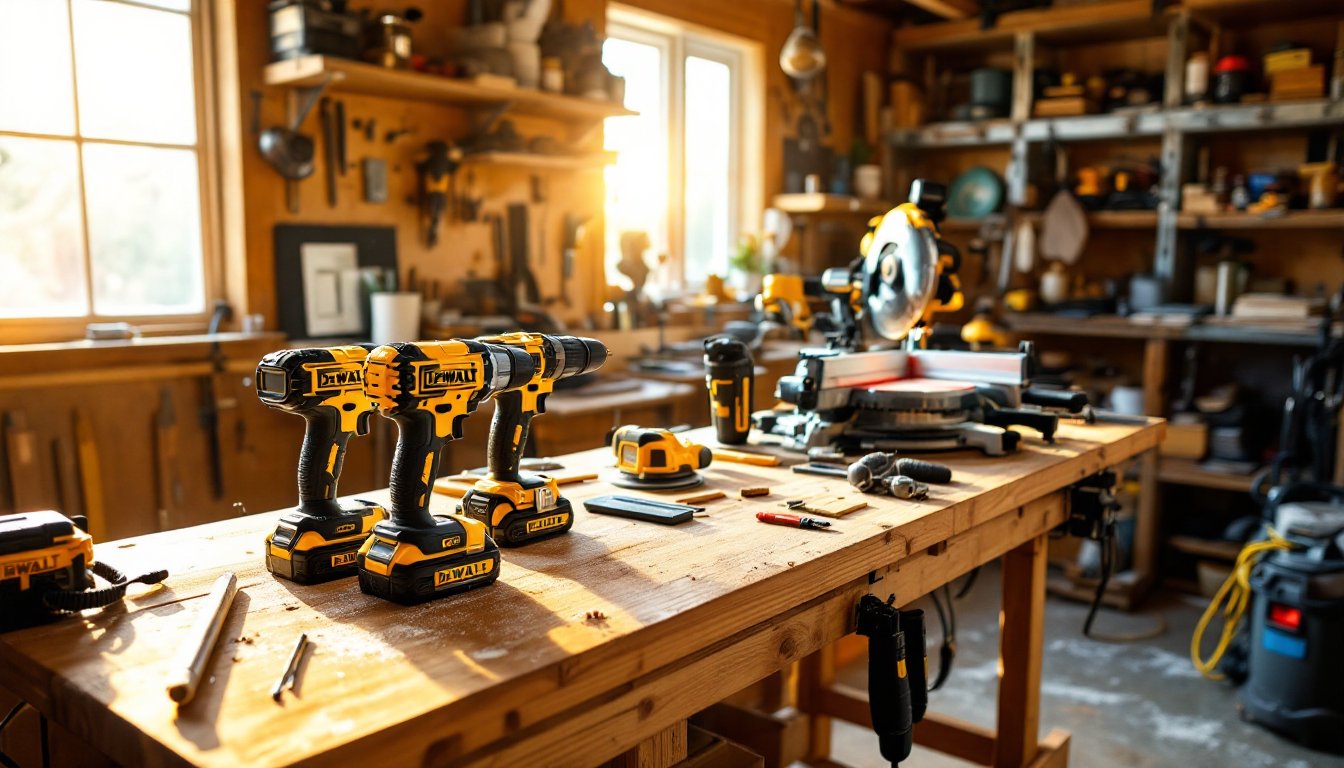
Brands matter less than battery compatibility. DeWalt, Makita, Milwaukee, and Festool all make solid cordless drills. Most homeowners benefit from buying a drill and impact driver from the same manufacturer so batteries interchange.
Circular Saws and Miter Saws for Precise Cuts
A circular saw is the workhorse of rough framing and deck building. A 7.25-inch blade (the most common size) cuts through 2x lumber cleanly at 90 degrees or beveled to 45 degrees. Cordless 20-24V models now compete with corded saws for power and runtime.
Perfect crosscuts and miter angles, though, demand a miter saw. This stationary tool locks the blade at precise angles and delivers repeatable cuts. A 10-inch miter saw handles standard trim and 2x material easily. If you’re framing or cutting rafters, a 12-inch saw handles larger stock. Compound miter saws tilt both left and right for crown molding and complex angles: sliding compound saws extend the blade forward, cutting wider material.
Choosing between them: A circular saw shines for ripping (lengthwise cuts) and on-site demolition. A miter saw dominates crosscutting, trim work, and angle cuts. Many DIYers own both. Circular saws run $80-150 for cordless, miter saws $200-400 depending on features. Buy a saw that accepts standard blades: specialized blade selection affects cost long-term.
Blade quality affects cut cleanliness. A 60-tooth blade leaves fine dust and smooth edges: a 24-tooth blade cuts faster but rougher. Keep blades sharp: dull blades generate heat, binding, and dangerous kickback. Safety rule: always wear eye protection and ear protection. Blade guards should move freely on circular saws, never taped or removed.
Orbital Sanders and Detail Finishing Tools
An orbital sander saves hours on finish work. Random orbital sanders (5-6 inches) sand wood smooth without creating visible swirl marks like older belt sanders. They’re fast, forgiving, and essential for preparing surfaces before stain or paint. A 120-grit start removes mill marks, then step down to 150-220 grit for final prep.
Detail finishing tools handle tight corners and edges. A detail sander (also called a mouse or mouse sander) accesses corners that an orbital can’t reach. If you’re refinishing furniture or trim-heavy work, add one to your arsenal. For curves and molding, a oscillating spindle sander works magic, though it’s more expensive and better suited to dedicated workshops.
When sanding, wear a dust mask or respirator. Sawdust from MDF and some exotic woods triggers respiratory irritation: fine dust accumulates in power tools and creates fire hazards. Use a sander with dust extraction, most plug into a shop vacuum. Sanding sealer or primer over bare wood prevents stain blotchiness on softwoods. Never rush sanding: a patient hand sanding with fine paper often beats aggressive machine work for final finish.
Sheets and pads are consumable. Buy in bulk: prices drop significantly buying 25-packs of sandpaper. Keep grits organized, nothing kills momentum like hunting for 150-grit when you’re in the zone.
Nail Guns and Brad Nailers for Speed and Efficiency
A finish nailer drives 15-16 gauge nails for trim and cabinetry. Pneumatic (air-powered) nailers dominate professional work for reliability and lower cost per unit. Cordless electric nailers ($200-400) offer convenience and no air-hose tangling. For a homeowner doing trim on one or two projects yearly, either works: pneumatic is cheaper, electric is grab-and-go.
A brad nailer drives tiny 18-gauge fasteners perfect for delicate trim and detail work. Brads leave minimal wood putty needs versus larger nails. They’re essential for crown molding, shoe molding, and chair rail work where nail heads show.
Coil nailers and framing nailers handle heavier duty, sheathing, subflooring, rough framing. These are overkill for trim and interior work but invaluable if you’re building a deck or framing walls.
Nail gun safety cannot be overstated. Always keep your fingers out of the firing line, yes, it happens. Cordless and pneumatic nailers fire hard enough to skin and embedded nails. Wear safety glasses. Never point a nail gun at anyone, even “just testing” the trigger. Keep your non-trigger hand anchored somewhere safe, not holding pieces near the strike zone. Double-check that wood pieces are secure before firing.
Chop Saws and Table Saws for Heavy-Duty Projects
A chop saw (also called a cold-cut saw) cuts metal studs, aluminum trim, and bolts without sparks or heat. If you’re installing steel framing or working with metal cladding, a chop saw saves time versus a hacksaw. Cordless chop saws exist but are rare: most run on 120V or 240V power. They’re workshop tools, not portable.
A table saw is the centerpiece of any serious workshop. It rips lumber lengthwise, crosscuts with a miter gauge, and cuts precise angles. Portable contractor saws ($400-800) work well for DIY: full-size cabinet saws ($2,000+) suit dedicated shops. A table saw demands respect, it’s responsible for more woodshop injuries than any other tool. Never wear loose sleeves or gloves. Keep hands at least 6 inches from the blade. Always use a rip fence or miter gauge: freehand cutting invites binding and kickback.
Table saws generate significant dust and noise. A dust collection system, even a basic shop vac, is non-negotiable. Long-term exposure to sawdust causes lung issues: wear a dust mask. Hearing damage accumulates quietly: a properly-fitted earplugs or earmuffs are essential.
Both chop saws and table saws are stationary, workshop-based tools. Neither is portable. They’re investments in permanent or semi-permanent shop setups. For true jobsite-only work, a miter saw and circular saw cover 95% of cutting needs.
Safety Gear and Maintenance Best Practices
Personal protective equipment (PPE) is non-negotiable. Safety glasses or goggles protect against flying debris, dust, wood chips, and splinters travel fast. Hearing protection matters: prolonged exposure to power tools above 85 dB causes permanent hearing loss. Corded and cordless drills run 80-90 dB: circular saws and table saws exceed 100 dB. Earmuffs or foam earplugs are cheap insurance.
Dust masks or respirators depend on the work. A basic disposable mask ($1-5) blocks fine dust for light sanding. A half-face respirator with replaceable cartridges ($30-50) suits heavy sanding or finishing work. Full-face respirators ($100+) are overkill for most home projects but essential in contaminated spaces.
Work gloves protect against splinters but keep them away from rotating tools. Never wear gloves near drill chucks, belt sanders, or table saw blades: they catch and pull skin. Cotton or leather work gloves for handling rough lumber are fine. Nitrile gloves for finishing work prevent skin absorption of stains and finishes.
Maintenance extends tool life dramatically. Keep batteries clean and dry: corrosion shortens lifespan. Drain air compressors monthly to remove moisture that rusts internal components. Clean dust from tool vents with compressed air, accumulated dust insulates motors and causes overheating. Sharpen saw blades every 50-100 cuts: dull blades burn wood and strain motors.
Store tools dry and organized. Moisture rusts metal and degrades battery terminals. A simple pegboard or wall-mounted organizer beats a jumbled toolbox. Tool sets are great starter collections, but organizing individual tools as you accumulate them builds better muscle memory.
Conclusion
Mastering carpentry power tools opens entire project categories that would otherwise stay on the wish list. Start with a cordless drill and miter saw, that combo covers 60% of typical home projects. Add tools as projects demand them, not speculatively. Quality matters, but mid-range tools from established manufacturers outperform cheap knockoffs every time. Most importantly, respect the power. A circular saw doesn’t care if you’re experienced or brand-new: careless operation injures everyone equally. Learn proper technique before speed, and you’ll build faster and safer for decades to come.